Showing posts with label Barbara White Daille. Show all posts

Wednesday, May 4, 2016

7 Secrets to Writing While Stressed

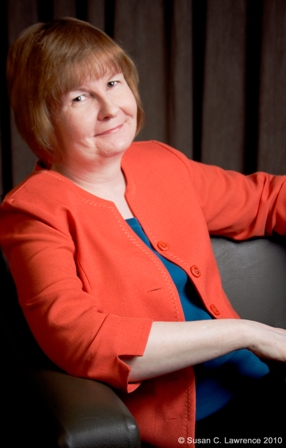
By Barbara White Daille


Hello, Seekers! I’m so happy to be back to visit with y’all again. My contributions to the community table are an Apple Spice Coffeecake and Chocolate-Chip Croissants. I always love the menu here, especially when there are items that double as dessert.

Dessert is not only my favorite meal, but desserts spelled backward is…our topic for today.

In roughly the thirty days before I began drafting this post, my personal life took a nosedive. We needed to leave the state for a week-long trip for a family funeral, spent a day in a hospital Emergency Room, and dealt with a family member’s illness and the doctor visits, follow-up appointments, and medical testing that went along with it. During this time, I was working on two complete novels and one proposal, each with its own deadline. While this doesn’t make me an expert in stress, it definitely gives me a good understanding of what it’s like to experience the symptoms.

Here’s a clip of a woman under a different kind of stress, thanks to the ex-husband who has just reappeared in her life. This is from my upcoming book in The Hitching Post Hotel series, Cowboy in Charge:

Layne did the best she could with toothbrush and mouthwash and comb, but it wasn’t much. And it was quick.
The symptoms she had been battling for two days now had gotten worse instead of better, and the short time on her feet showed her just how shaky this flu had left her. She gave thanks that when she had gone to answer the door, she hadn’t been holding the baby.
The last thing she remembered before passing out was the look of alarm on Jason’s face. When she had come to, she found herself cradled like a baby herself in his arms. She had fainted for only a second, he assured her. Still, ignoring her protests, he carried her into the small living room and deposited her on the couch.
Moments later, her stomach had heaved and she had bolted and here she was now, hiding in her bathroom the way she and her friends had hidden in the girls’ room at school when they wanted to exchange gossip about the boys.
The only boy she’d ever had eyes for was Jason.

~~
We all deal with stress at one time or another. Here are some secrets—or suggestions, if you prefer—for ways to get your work done while you’re under the gun. These secrets can work just as well for non-writers, too. Also, they’re numbered for clarity but are in no particular order. I tell you this because if you’re like me, you’ll stress over wanting to do the “steps” in the proper sequence!

1) Play with your process.

When under stress, consider making changes to your writing process. (Note:  if the idea alone sends your blood pressure up, skip immediately to another suggestion.)

If you write in the afternoon, try sneaking the pages in early in the morning, before the day hits you and the stress level rises. If you usually do a comprehensive bio for every character in your book, do interviews with just the main characters instead and go from there.

Pantsers might need to give their tired brains the safety net of an outline, no matter how rough. Plotters who normally plan every scene down to the very last detail may find their brains are too scattered to follow their strict process. They may have better luck winging it, at least for a few pages at a time.

2) Be kind to yourself.

This is a no-brainer, especially on those days when you feel you have no brain cells left. Sleep more, eat well, give your body time to relax. Stretch, meditate, take breaks from the computer. Listen to the music of your choice, curl up with a good book, or take your baby or puppy for a walk in the park. Do whatever works to help you unwind.

3) Shake up your schedule.

When you’re under stress, it’s okay to mix things up and even to let some things slide. Have scrambled eggs for dinner one night instead of making the usual meat-veg-potatoes meal. Hit the snooze button once, or maybe twice, and get a few extra minutes of sleep. Skip the trip to the gym one day and jog around the block. While you’re at it, stop to smell the roses.


4) Use your writing time as an escape.

This is a tough one for many of us. As it is, we feel guilty that our writing takes time away from the family/pets/carpool/problems/fill-in-the-blank. And now I’m asking you to use that time deliberately as an escape? You bet I am.

Diving into a work-in-progress will help take your mind off your troubles. If you’re on deadline, whether self-imposed or for a publisher, writing—even a paragraph or two a day, if that’s all you can manage—will keep your head in the story. Watching those page numbers go up lets you see you’re getting closer to your goal. And as you increase your page count, you’ll decrease your stress…in the moment and down the road.

5) Use your experiences as fodder for your book.

Any stressful situation has the potential to be tweaked to fit a scene in a story. An angry phone call to lodge a consumer complaint can translate to an explosive scene with a troublesome teenaged son or daughter. Being pulled over by a state trooper for speeding might spark an idea for a heroine being followed by a stalker.

6) Mine your emotions.

I’m not saying we should whip out a notebook at a wake, but the emotions we feel in that situation could very well be appropriate for a heroine who is losing a parent to cancer. Having to make a speech yourself could provide just the case of nerves you need for your hero who is preparing to ask for a raise.

7) Reward yourself.

While being kind to yourself includes mostly no-cost options, if you have the extra cash to give yourself rewards, go for it. You deserve it. A massage or a yoga class literally, physically, can relieve stress. A movie can act as a mini-vacation for your mind. A new dress—or business planner—may lift your spirits and will still be around long after your stress is gone. Fresh roses or that cup of gourmet coffee are considered aromatherapy!

~~

In this clip from the opening of one of my books, A Rancher’s Pride, I made life extra-stressful for my hero:

Everything looked familiar, except the child sitting on one of the couches.
A beautiful little girl.
The daughter he’d always hoped for, the start of the family he’d never had.
He shook his head. Pipe dreams, for sure. Ronnie had never told a true story in her life. This child couldn’t be his.
The girl’s eyes shone in the light from the table lamp beside the couch. Silver-gray eyes surrounded by dark lashes, a perfect match to his own.
His throat tightened. He felt frozen in place.
She gave him a shy smile.
He’d seen that half-twisted grin in plenty of his own childhood pictures. Not impossible after all. The child was his.
 “Hello.”  The word came out in a croak. He hadn’t the first idea of what to say and went for the standard opening line. “What’s your name?”
Mom moved up to stand behind him and rested her hand on his arm. “Her name’s Becky,” she told him. “But she can’t hear you, Sam. She’s deaf.”

~~

I hope you find the examples and suggestions above helpful.

Have any of these ideas worked for you in the past?  Do you have any other suggestions for us?  Answer one of these questions to get your name in a drawing for one of my books!

The winner will receive her/his choice of an autographed print copy of A Rancher’s Pride or The Cowboy’s Little Surprise, book one in The Hitching Post Hotel series. (US mailing addresses, please.)  One of the villagers here at Seekerville will draw and announce the winner’s name.

About the Author:
Barbara White Daille lives with her husband in the sunny Southwest. Though they love the warm winters and the lizards in their front yard, they haven’t gotten used to the scorpions in the bathroom.
A larger print reissue of A Rancher’s Pride, book one in Barbara’s popular Flagman’s Folly series, releases in June exclusively from Harlequin. The next book in The Hitching Post Hotel series is Cowboy in Charge, debuting in July 2016, with other books in the series to follow. At the end of 2016, she begins a new sweet romance series for Entangled Bliss.
You can find more info about Barbara and her books at the following locations:

From the cover of Cowboy in Charge, July 2016

TIMING IS EVERYTHING
Single mom Layne Slater thought she'd seen the last of Jason McAndry when he chose the rodeo over her and their unborn son. Now Jason's back in Cowboy Creek and just as handsome as ever. But Layne can't give in to those feelings again. She has to protect her children…and her heart. 
Jason wants to try to make up for the pain he caused when he left. The least he can do is help Layne while he's home. Before long, Jason realizes he's finally ready to be the husband, father and man his family deserves. But can Jason prove to Layne that this time, their love is forever?

Monday, June 29, 2015

What's in a Name? How to choose a title for your book

Barbara White Daille
By Barbara White Daille

What's in a Name?

Hey, everyone! It’s a pleasure to drop in and visit again.  As always, I’m looking forward to a fun and lively chat—and some delicious goodies, of course! I’ve brought along homemade chocolate-chip and blueberry muffins, so let’s fire up the coffeemaker, heat up the teakettle, and settle in.

Today we’re talking about titles.

Coming up with the right title for your book is an important process. If you’ve ever picked up—and even purchased—a book based on the title alone, you’ll know how true that is. Finding the right title, the one that speaks to you and to readers, that gets the gist of the story across, and that conveys something extra about your book, can be both challenging and fun.

These are just some of the many things to think about when naming your story.

Who is your audience?

If you’re writing to share your stories with others, then obviously, you need to catch the interest of an audience. To attract new readers or to hold the interest of your current readers, you’ll want your title to feature keywords that grab their attention.

For example, I’ve been a lifelong mystery reader, and even in grade school, I was drawn to any book that included adventure, mystery, secret, or clue in the title. Anyone remember the Bobbsey Twins, Nancy Drew, and the Hardy Boys? What mystery lover could resist a title such as The Bobbsey Twins at Mystery Mansion, The Clue of the Broken Locket, or The Secret of the Old Mill?   

As an adult, I love to read mysteries and romantic suspense and still search library and bookstore shelves—and websites—for titles containing those mystery-related words.

Many of my own books have rancher or cowboy or sheriff in the title because my publisher knows those are heroes our readers love.

What’s your book about?
Click to Buy

This can encompass many things, including:

1. Your subject matter. The type of book you write—whether contemporary or historical fiction or nonfiction—will determine how you tell your story and how much background material and research you weave through it. But writers of any type of book can touch on similar topics:  small-town life, the settlers of the American West, life-threatening illness, blended families.

2. Your theme. What is the book about—that is, what is its underlying message? Forgiveness? Revenge? Reclaiming your faith? The power of love? Belonging?

Finding the right words or phrases to convey these themes will help you catch readers who love the topics as easily as those childhood mystery titles reeled me in.

How can you make the most of your title?

1. Play off the tone of the book. Of course, there are exceptions to every rule, but usually, the tone of a gentle, heartwarming romance will be very different from that of a thriller. A romantic comedy won’t read like cutting-edge science fiction. Whatever the tone of your story, you can use the appropriate words to match.

2. Use your setting. In the books I’d read as a child, an adventure usually involved a mystery. But it can also be connected to travel and exploration, two topics some readers love. Again, this works for fiction or nonfiction. Instead of the generic adventure, use descriptive words that indicate the setting of your story…that tell your reader exactly where the adventure will take place. A spaceship. An antiques emporium. A cathedral. The Adirondacks. Davey’s Diner. Wyoming.

Click to Buy
3. Make the title do double- or triple-duty. Here are some examples using my own titles.
A Rancher’s Pride is a perfect fit for its story. This title does triple-duty, as my hero is a very proud man whose pride took a beating after his ex-wife abandoned him. Since then he has let that pride get in the way of accepting help from his many friends. Finally, as the book opens, he learns he’s a daddy, and as he grows to love his little girl, she becomes his pride and joy.
In Family Matters, my heroine is the one person in her family who can always be counted on to come to their rescue over anything involving…well…family matters. In this story, she has a choice to make between her immediate goal and her family’s needs. She makes a great personal sacrifice because, to her, family matters.
The title of my current book, A Rancher of Her Own, also does double-duty. Jane’s cousin, who recently found the man of dreams, makes a reference to Jane finding (you’ve guessed it) a rancher of her own. The irony is, city-slicker Jane is determinedly single and happy to remain so. The last thing she wants is a man of her own—especially one as contrary as solitary rancher Pete.
Click to Buy
I hope all this will have given you some ideas to help you create titles for your own books.

Now, let’s see the results of a good title in action. This involves a little homework on your part…and a giveaway from me!

Tell us the title of a book that would catch your eye and share why it would make you pick it up for a closer look. (Please choose a book other than your own. ;) )
 
Three winners will receive their choice of an autographed print copy of A Rancher’s Pride or Family Matters.  One of the villagers here at Seekerville will draw and announce the winners’ names.

And now, Seekers, let the chatting begin!


~~~

Barbara White Daille lives with her husband in the sunny Southwest. Though they love the warm winters and the lizards in their front yard, they haven’t gotten used to the scorpions in the bathroom.
Barbara’s new series, The Hitching Post Hotel, features a matchmaking grandpa determined to see his three granddaughters wed. The series began in April 2015 with The Cowboy’s Little Surprise and continues with A Rancher of Her Own in July and The Lawman’s Christmas Proposal in December.
You can find more info about Barbara and her books at the following locations:

A Rancher of Her Own
A REASON TO STAY 
Ranch manager Pete Brannigan has no interest in playing tour guide to a city slicker like Jane Garland. But spending a few days with the headstrong photographer is a small price to pay for everything her grandfather has given the single dad. Though Pete's drawn to Jane's sharp wit and striking beauty, he won't hurt his young children by falling for another woman who puts her career before family. 
Jane's seen the world through her camera…and used it to shield her emotions. With Pete, she can finally let her guard down. If only he could do the same. Despite their powerful bond, Pete still can't trust Jane with his kids or his heart. But if he keeps pushing her away, he may ruin any chance their relationship has to develop.


Friday, April 3, 2015

Setting Your Story - Where in Your World are We?

Barbara White Daille 
Barbara White Daille


 Hello, Seekers!  I’m so happy to be visiting again and am looking forward to a fun day of sharing, learning, and chatting.  Just remember, what I’ll be saying comes from my own experience, and your mileage may vary.

Our topic for the day is setting, so fix your beverage of choice, grab one of the chocolate-chip muffins I’ve brought along, and settle back in your own comfy surroundings for this read.  ;)

As we know, setting can play a very important part in a story.  Getting the details right can be a tricky thing to do, as readers all have their own tastes regarding how much or how little description they want to see in a book.  For example, I tend not to like reading huge chunks of description, including setting.  That means I need to work very hard at remembering to layer setting into my fiction.

For me, the important thing to remember when describing a location in a story is that we want to orient the reader in our fictional world, no matter where that might be—even if it's simply our character’s backyard. 

From my days of being a mystery reader and writer, I learned to lay out the details of setting the way a mystery author would lay out clues.  To weave them into the action and dialogue and introspection of a scene.  In other words, to “hide” them in plain sight. 

When a mystery is solved, we want readers to shake their heads and say, “I should have seen that.”  With setting, we want those readers to feel they’re living in the story, occupying that place with the characters.  We want them to think, “I can see that.”

When weaving setting into a scene, the description—again, for me—must play double- if not triple-duty, including:  orienting the reader, revealing character, and/or furthering the plot. 

Buy Here
Description can also do so much more.  Sometimes, setting a scene includes descriptions of characters.  For example, reading about females in high-buttoned shoes and dresses with bustles very like puts the reader into historical settings.

I’m going to share a few snippets from some of my own stories, as they’re what I know best. 

In the first of my Flagman’s Folly books, A Rancher’s Pride, the hero has just received the stunning news he’s the daddy of a little girl he doesn’t believe he has fathered.  Here’s his first sight of her:

A beautiful little girl. The daughter he’d always hoped for, the start of the family he’d never had.
He shook his head.  Pipe dreams, for sure.  Ronnie had never told a true story in her life.  This child couldn’t be his.
As he moved another step into the room, she looked up.  Small and blonde, just as his mom had said.  And more.
The girl’s eyes shone in the light from the table lamp beside the couch.  Silver-gray eyes surrounded by dark lashes, a perfect match to his own.
His throat tightened.  He felt frozen in place. 
She gave him a shy smile.
He’d seen that half-twisted grin in plenty of his own childhood pictures.  Not impossible after all.  The child was his.

In the clip above, I wanted to give the reader a first glimpse of Becky through Sam’s own initial impression.  And of course, I wanted Becky’s description to further the plot.
What the reader (and Sam!) learns in the remaining few paragraphs of the scene is that Becky is deaf. 
This clip comes from the scene that follows:

Looking out across the yard, he said, “Laying in fence, breaking a horse, rounding up cattle.  Jack, those jobs, you know I can handle with my eyes closed.”
The foreman nodded.
“But this...”   How could he take care of a deaf four-year-old daughter he hadn’t, till yesterday, even known existed?
Raising his gaze, he looked as far as he could see, focusing on the higher pastures and, above them, the ranks of pinon and pine.  Viewing the extent of his ranch usually gave him pleasure, but right now, even that sight couldn’t take him from his troubles.

Buy Here
Above, we see Sam in familiar surroundings, viewing a setting he himself states usually gives him pleasure.  Not too obviously, I hope, the clip also hints he would normally take strength from his land, as well, but is now too shaken by all the news about Becky.
This is part of the same scene:

Late afternoon sunbeams slanted through the cedar trees edging the yard.  Becky ran from a patch of darkness into light and back again, playing her private, silent game.  As they watched, she stumbled.  Sam slapped his hand flat against the wooden barn door.  If she hurt herself, how would he comfort her?
Geez.  Talk about overreacting.
Or was it? 
Could he ever keep Becky safe?

This snippet also hints at plot and Sam’s character.  Also, through light and shadow, I hope to show and (excuse the pun) foreshadow that Becky inhabits two worlds, hearing and deaf.

In The Cowboy’s Little Surprise, Cole returns to Cowboy Creek after years away and discovers the local hotel has been through a few changes.  This is actually a more descriptive passage than I normally write, but I’m attempting to give the reader something to “see” through a contrast and to build tension into the ending of a scene:

Jed beamed.  “We try to keep the place up.”

“You’ve done a good job of it.”

Years of polishing had buffed the hotel’s registration desk to a high sheen. The brass foot rail encircling it gleamed. Even the knotty-pine walls and flooring of the reception area gave off a soft glow, as if the candles in the wrought-iron holders on the wall had been set to flame.

In the sitting room off to one side of the entry, the same heavy, low-slung couches and chairs sported the same handmade afghans, and the chime clock on the wall still ticked the seconds away like a slow, steady heartbeat.

Or maybe that was his own heart, thumping so hard he could hear it.

No, the Hitching Post hadn’t changed. Neither had the old man in front of him. But he himself sure had, and the time had come for him to prove it.


Buy Here
And for the final example, again from The Cowboy’s Little Surprise, when Tina first meets up with Cole after the space of several years, this is what the reader sees:
 
In one startled, reflexive sweep, she took in almost everything about him. The light brown hair showing beneath the brim of his battered hat. The firm mouth and jaw. Broad shoulders. Narrow hips. The well-worn jeans, silver belt buckle, and scuffed boots.


Using those “clues,” the reader should pick up from his clothing that Cole is a cowboy; from the condition of his hat, jeans, and boots that he’s a hard-working cowboy; and from the silver buckle on his belt that there’s a chance he has spent some time on the rodeo circuit.  Not only does this give the reader a more complete picture of Cole, it ties both characters to the ranch setting.


There are, of course, many ways to layer setting and description into your stories.  I hope this has given you a few new ideas.

Speaking of giving…  ;)  I’m offering an autographed copy of The Texan’s Little Secret to three people who comment on the blog (US mailing addresses only, please).  To enter the drawing, tell us your all-time favorite setting, real or fictional.  One of the villagers here at Seekerville will draw and announce the winners’ names.

And now, Seekers, let’s chat about setting!


~~~

Barbara White Daille lives with her husband in the sunny Southwest.  Though they love the warm winters and the lizards in their front yard, they haven’t gotten used to the scorpions in the bathroom.
Barbara’s thrilled to share news about the debut of a brand-new series, The Hitching Post Hotel, about a matchmaking grandpa determined to see his three granddaughters wed.  The series begins in April 2015 with The Cowboy’s Little Surprise, followed by A Rancher of Her Own in July and a third as-yet-untitled book in December.
You can find more info about Barbara and her books at the following locations:

The Cowboy’s Little Surprise – Barbara White Daille – April 2015
THE LONG WAY HOME 
A guy like Cole Slater is hard to forget. Tina Sanchez should know—for years since high school she's tried to bury the pain of Cole's cruel betrayal. But it's impossible to ignore the man she sees reflected in her young son's eyes now that Cole is back in her life—and about to meet the child he never knew he had. 
Returning home to New Mexico, Cole is determined to put his playboy reputation to rest. Especially now that he knows there's a little boy looking up to him. And seeing Tina again reignites all the feelings Cole ran from as a teen. Despite his fear that he can't be the man Tina deserves, he's determined to try. For his son's sake—and his own.
Find The Cowboy’s Little Surprise at: