

KA-BOOM!
What’s that sound? Why,
that’s the extra punch and pop a writer can infuse into their prose in a number
of glorious ways. And today, I’m going to share a few of my very favorite tips
I use to in“fuse” a wee bit more boom and bang into my writing.
From double entendres to
onomatopoeias, writers have the opportunity to make their words work double and
triple time, taking their novels from ho-hum to ho-HOT!
So, shall we get started?
Ready, aim, 🔥🔥🔥!!!!!
WAYS TO GET MORE BANG FOR
YOUR WRITING BUCK
1.) CREATE A MOVIE IN THE READER'S MIND WITH MOTION PHRASES: With unlimited access to Netflix, Hulu, and umpteen cable offerings, today's readers are visual people, which is why it's important to create a movie in your readers' minds. I wrote a blog about this a while back called Keeping It "Reel" ... or a "Novel" Approach to Putting a Movie in Your Reader's Mind,
so
that explains movie mind in more detail if you are interested.
One of the easiest ways to create a movie in a reader’s mind is to take
normal phrases like “she caught her breath,” “a cold chill,” or just an
ordinary “blush” and ramp them up through motion phrases.

Here are a few sample sentences taken from my book A Passion Most Pure in which motion phrases hopefully help the
reader see and feel the emotion in the character’s mind a little more
dramatically.
Instead of “she caught her breath”:
The oxygen swirled still in her lungs.
🔥
Instead of “a cold chill”:
The first time
Brady mentioned her name, a cold chill slid through Collin like a slow-motion
avalanche.
🔥
Instead
of “her cheeks paled”:
Faith turned and the blood in her face coursed to her
toes like a thundering waterfall.
🔥
Instead of a “blush”:
Heat roared to his cheeks
2.) MAKE DESCRIPTIONS DO DOUBLE AND TRIPLE DUTY: Okay, you have to write a
description anyway, right? Why not make it do double duty by giving insight
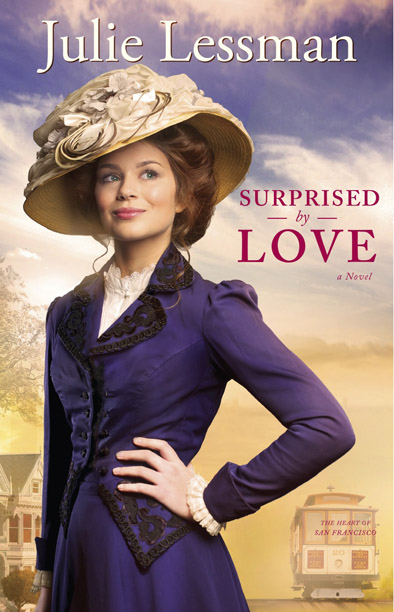
into the character at the same time? In the clip below from Surprised by Love, Book 3 of my Heart of
San Francisco series, I tried to do just that by describing both the setting
and the man in it with extra clues to his character.
He
stood staring out the mahogany French doors, one palm braced to the wall, his
charcoal suit coat strained against broad shoulders. Wisps of dark hair curled
up on his high collar, typical for a man too consumed with obligations to take
time for his barber. She noted the gray French Mossant fedora casually tossed
on the cordovan loveseat as if he expected to stay and was making himself at
home, also typical of the man she intended to show the door.
In the two clips below from
Book 3 of my Isle of Hope series, His Steadfast Love, I used the setting to
correlate with the heroine’s feelings in the first clip, and the hero’s
thoughts in the second.

Just like us,
she thought with a stutter of her pulse, and instantly her good mood plunged
like the spring gushing over the boulders. Because thoughts like that were
nothing but wild water careening out of control, as fleeting as the foamy spray
that misted over the brook below.
🔥
He stared at the frail hand on his arm that was
anything but, so translucent the blue veins looked like a road map. He stifled
a grunt.
One leading straight to my demise.
3.) POUND THE NAIL HOME WITH REPETITIVE WORDS: Normally I try to never repeat the same word in a
sentence, paragraph, or even on the same page if I can help it. But sometimes
repetitive words can be a great tool for conveying a host of emotions. In the
sample below from A Passion Redeemed,
I used the word “oh” three times in a row, each conveying a different meaning,
which in my humble opinion, makes the scene all the more dramatic.

Her eyes glowed. “I’m glad. I pretty much kept a
constant vigil of prayer.” She focused on her hands, knotted in her lap.
“Especially when I knew you were on the ship.”
He scratched his head and leaned back. “Yeah, well
the ship was fine. It was nearing Boston where the problems began.”
She looked up. “What do you mean?”
“It’s a long story, but the sum of it is that I asked
Charity to marry me.”
He heard her catch her breath, the shock evident in
her eyes. “Oh …”
“Because I thought Rigan raped her and she was
pregnant.”
“Oh.”
“But she lied.”
Kathleen swallowed hard. “Oh?”
“Yeah. So I high-tailed it out of there. But I wanted
you to know that it was a close call.”
She seemed to teeter on the edge of the chair, her
gaze fixed on his. “How close?”
Heat collared his neck. “Very.”
4.) Reinvent Cliches: Okay, I’ll be honest with
you — I tend to be an idiom/cliché kind of gal, especially while I’ve been
writing my new 1880's Western series, Silver Lining Ranch because let’s face — idioms
and cliché just seem to work for that era.
BUT … they work sooooo much
better when you can give them a little creative twist like I attempted to do in
the samples below. The first two are from A
Passion Redeemed, a play on “the pot calling the kettle black” and dressing
up “good riddance” with humor. The third one is from Book 1 in my Silver Lining
Ranch series, Love’s Silver Lining,
where I use a play on the idiom “put that in your pipe and smoke it,” but tie
it in to the stew the heroine is serving her patient instead.
Instead of "The pot calling the kettle black":
“Well, that’s certainly the lush calling
the sot tipsy.”
🔥
Instead of "Good riddance":
“Then you’re going to say good riddance to a man who
doesn’t have the sense that God gave a goat …
🔥

Instead of "Put that in your pipe and smoke it":
Maggie shoved the thermometer in Aiden’s mouth,
cutting him off. “And Aunt Liberty and I are not moving to any fancy ranch house, Mr. O’Shea, so you can just
put that in your pipe and smoke it.”
Aiden whipped the thermometer out to glare, shaking
it in her face. “For your information, missy, Sister Fred confiscated my pipe
the first day, so you can just put that in your stew and stir it.”
5.) TOSS IN A GRENADE WITH Onomatopoeia: Oh,
gosh, confession #2 — I absolutely LOVE onomatopoeias!! You know, those
wonderful little words that imitate, resemble, or suggest the sound that it
describes? Such as those in the two clips below, the first from my novella from
the Heart of San Francisco series, Grace Like Rain and the second from my upcoming new novel release, For Love of Liberty, due out later this
month (shameful plug here, can be pre-ordered at a discounted rate HERE. The third
sample is from Book 3 of my Daughters of Boston series, A Passion Denied.

Ka-boom!
Patience Peabody literally
jumped in the air with a squeal, as if goosed by the bolt of lightning that lit
up the galley kitchen of McClare, Rupert, and Byington. Heart slamming like the
waves of water that battered the window, she poured a steaming cup of coffee
with shaky fingers, staring out at a sodden sky that was still two hours from
dawn.(Grace Like Rain)
🔥

Putting the cup down, she turned away to repin a few
stray curls from an alabaster neck he so craved to taste, then smoothed the
skirt of her dress like he so longed to do.
Ker-splash!!
Finn blinked, completely caught off-guard by dirty
water sluicing down his face onto his favorite shirt. Liberty stood there with
an empty bucket in her hand and a smirk on her face while the raucous sounds of
“Turkey in the Straw” boomed to the rafters. (For Love of Liberty)
🔥

Bam, bam, bam. Woof, woof, woof. Brady moaned and flailed a hand over the side of the
couch in an effort to calm Miss Hercules, who staggered up, as sleep-drugged as
he. “Lay down, girl, and go back to sleep. I can’t move yet.” With a sleepy
growl, Miss Hercules plunked against the couch, jarring Brady’s senses.
Boom, boom, boom! The knocks were more insistent now, and Brady stubbed
his toe as he scrambled for the door. A swear word he hadn’t uttered in years
leapt from his lips, causing heat to shoot up the back of his neck. Breathing
hard, he unflipped the lock and hurled the door wide, gritting his teeth
against the pain.
“Sweet mother of Job, is this what you look like
every morning?”
Brady blinked. The motion produced a nagging ache
between his eyes. “Charity. What the devil are you doing here?” (A Passion Denied)
6.) GET CREATIVE WITH ACCEPTABLE SWEAR WORDS: Okay, confession #3 — I like swear words. They add drama, punch, and realism to anything we
write, but obviously they are taboo in the Christian market.
Case in point: In
my new contemporary Isle of Hope series, I used words like flippin’, freakin’,
and frickin’, only to accrue a number of 2- and 3-star reviews that complained about
the language I used. So to safeguard my 5-star rating on each of the books in
the series, I deleted all of those words and have gotten nothing but 5-star
ratings since with an occasional 4-star. But … I have to admit, the very idea
still ticks me off.

In my new Western series,
I have a spunky suffragette from Virginia City, Nevada with an Irish temper, so
I needed lots of acceptable “emotional slurs” to help create her mood and that
of a Wild West town. Here are a few I came up with, but if you want the
entire list, you'll find it in my Romance-ology 101 book.
He expelled a noisy breath, wishing with everything
in him he could just court her the way that he wanted. “No, darlin’ because I’m
pretty darn sure I’m in love with you.”
“Horse apples!” she shouted, and he grinned when she kicked the
door.
🔥
“Horse biscuits!” He launched to his feet and loomed in to go eye to
eye, knuckles white as he leaned on the table. “News flash, Miss Bell, this is
not New York City with its fancy airs and la-ti-da ways. This is Virginia City,
built on the backs of miners who chew, spit, and swear, and I guarantee if we
hire strings, they’ll be stringing me
up for defamation of their
character.”
She shot up faster than one of those Roman candles
they always set off on Fourth of July, with just as many sparks in her eyes.
“Oh, now, there’s a valid reason to
do things my way.
“Horse puddles!” Liberty hissed, occupying herself with flicking
paint specks on the grass while her lips jabbed into a scowl. “I just refuse to
waste anymore breath on that mule of a man than necessary because he doesn’t
listen anyway,” she said with glower in said mule’s direction. She attempted to
sidetrack the inquisition with a sudden keen interest in their booth, squinting
as she circled to assess. “Just a little more paint, I think, and we should be
done, ready to mount the school bell.”
Her face flushed almost purple, and pleasure coursed
through his veins at being able to evoke some sort of emotion from this
fire-haired beauty who haunted his dreams. As a God-fearing man, he knew he
shouldn’t take such pleasure in baiting one of God’s own, but holy thunder, he never could help
himself where Liberty O’Shea was concerned.
7.) CREATE A MOOD WITH COMPARISONS COMMON TO THE STORY: I
just LOVE creating a scene where I compare the characters to elements I’ve used
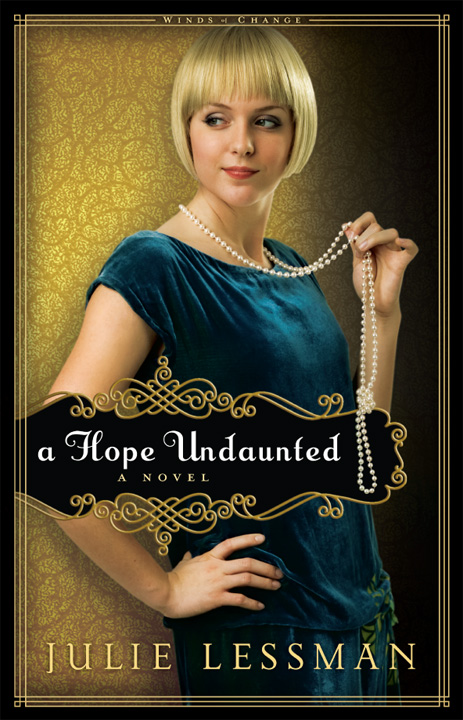
in the story. For instance, in the clip below from A Hope Undaunted, both the hero and heroine absolutely adore Nehi
grape soda, so there are several scenes throughout the book where Nehis are a
part of the plot or humor. It just seemed natural to me, then, to utilize Nehis
to describe the heroine’s mood through the eyes of the hero in a scene where’s
she’s battling with her father.

In total fascination, Luke watched a battle
being waged between the most stubborn girl he’d ever seen and the man from whom
she’d obviously inherited it. Time seemed to still as Katie stared her father
down, every muscle strained with resistance. He could hear her shallow
breathing as her chest rose and fell in indignation, and the surge of her will
appeared so strong that her body seemed to shimmer with intent, ready to
explode, like a warm and shaken bottle of pop. And then painfully slow, as if
all combustion had seeped out from her bottled anger, she lowered to her seat,
the pout on her lips as flat as a week-old glass of Nehi.
8.) USE Opposites TO
DRAMATIZE A POINT: Whoops … well,
here we go, another favorite of mine. I just LOVE taking opposite components
and juxtaposing them in the same sentence or paragraph for extra drama and
effect. Here’s one of my favorites from A
Passion Redeemed:

How
long could it possibly take to get over her sister, a woman with whom he’d
barely scratched the surface? A woman who was a feast to his
eyes but a drought to his soul.
He sighed. But scratch the surface he had, whether he
liked it or not. The lust had finally simmered and stewed, thickening into
something he’d tasted before. Longing. Missing. Caring. He closed his eyes.
Dear Lord, how long would it take this time?
And here’s another from His Steadfast Love, where I compare the
ice cream the hero and heroine are eating to the hero’s thoughts and mood:

“I was wrong,” he said softly, not really realizing
till now just how much. “I was being selfish and worrying about my needs more
than yours, and God called me on it.”
Spoon paused in her mouth, she snuck another look,
caution deepening the blue of her eyes. “How?”
How? He
huffed out a sigh and settled back against the seat, scooping more ice cream
into his mouth. The sweet taste of cream
took an “easy” glide down his throat while his molars crunched “hard” on frozen
chocolate, releasing a burst of flavor onto his tongue. Easy and hard. Not
unlike his relationship with the woman beside him.
He chewed while his gaze wandered out the front
window. The chunks of peanut butter gave way, melting all the way down. “He
called me on it through worrying about you. Thinking about you. Missing the
friendship I know we are meant to have.”
9.) USE REALISTIC Analogies
TO HELP THE READER RELATE TO THE CHARACTER: Ah, analogies … another favorite of mine! In my opinion, it’s one
of the best ways writers can exercise their creativity, and I have a blast
doing it whenever I can. Here are a few analogies that I created, comparing the knots in a clover necklace to the knots in the hero's stomach, the shock of a hero's statement compared to a knick on the hand that you don't feel until it starts bleeding, etc. I hope that these analogies
helped the reader—and you—to relate a little better and a little more dramatically as to
how the hero or heroine were feeling at the moment.
Her scent—lilac water and Pear’s soap—captured
him, tangling his tongue—and his stomach—into more knots than the clover necklace Tillie had strung around neck. (A Light in
the Window)
🔥
His statement drifted
in her brain, its impact silent, slow, and deep, like a knick she didn’t know
she had until she saw the blood on her hand. (A Heart Revealed)
🔥
She
heard his heavy sigh, and hope flickered in her heart like a dying flame
awaiting a gentle breeze. (A Hope
Undaunted)
🔥
The parlor was as dark
as his mood and the foyer as empty as his patience. (A Hope Undaunted)
🔥
“Why?”
he asked quietly, and the word made her flinch, like a sudden shaft of light in
a dark cellar where roaches and rats skittered. (A Heart Revealed)
10.) use Humor to add more
bang to a volatile situation: I really enjoy using humor in
tense situations because I think it enriches the scene without de-fusing the
seriousness of it. Here are a few instances where I did that and had a blast,
the first from A Passion Redeemed,
and the second from A Hope Undaunted.
Mitch wheeled around and slammed the phone on the
receiver. The earpiece fused to his hand as if embedded in his palm. He tried
to breathe. He couldn’t.
“Hello, Mitch.”
His mouth opened to speak, but nothing came out but
shallow air. Ice-cold prickles of heat traveled from the crown of his head to
the soles of his feat. He swallowed.
Still no air.
She shifted in the chair, a shimmer of pink satin
straining against full breasts while she adjusted her form-fitting skirt.
Several seconds passed and his hand was still one with the phone. With a rash
of heat up his neck, he slowly removed it, sagging back in the chair.
🔥
Katie
butted the door open and frowned, brows puckered and mouth parted in surprise.
“No, it’s not all right, Lizzie.” She pushed her way in and pulled off her
gloves, shoving them in her pockets. “For pity’s sake, I could be frozen to the
bone outside, waiting on you to let me say hello to my niece.”
She started to
unbutton her coat as she barged into the parlor and then stopped mid-stride,
all air effectively trapped in her throat. And at that precise moment, “frozen
to the bone” was only the tip of the iceberg.
“Hi,
Katie . . . it’s good to see you again.”
Her jaw
dropped like a rock. Good? To see
Luke McGee standing in Lizzie’s parlor? With a baby slung over his shoulder as
naturally as a sweat rag after a basketball game in the street? Katie tried to
breathe. She couldn’t. To speak. Impossible—her tongue was welded to her mouth.
She blinked. Good, at least something worked.
11.) Make a Scene Work for
You: Every single scene should have
a definite reason that moves the story forward. But I like to make a scene work
extra hard if I can by accomplishing more than just moving the story forward.

For instance, in my Heart of
San Francisco series, I had a scene I planned between the subordinate heroine
who was a widow and the subordinate hero, the brother-in-law to whom she was
once engaged before he cheated on her twenty years prior. The main reason for
the scene was to advance the tension between the two by playing up the friction
between their attraction for each other and the heroine’s resolve to never get
involved with him again despite his persistent pursuits.
I thought to myself, why not
get as much out of this scene as I can? So I put them in a family birthday
dinner and dancing scene at the Palace Hotel Ballroom, the pinnacle place to be
in 1902 San Francisco. Not only was The Palace Hotel a remarkable historical
setting I could play up and give the reader a true glimpse of San Francisco at
the turn of the century, but it gave the reader further insight into the wealthy
lifestyle of the McClares, one of San Francisco’s most prestigious families.
But still I felt I could do
more. So in addition to the main dancing scene between the widow aunt and her
brother-in-law, I inserted a conversation between the primary heroine and her
aunt, which not only allowed me to provide some very interesting back story via
dialogue, but enabled me to strengthen the bond between the heroine niece and
her aunt. In addition I was able to provide some spiritual insight throughout their conversation, create
more of a family closeness in this family saga, deepen both the heroine’s and
subordinate heroine’s insight into the plot and thereby the reader’s, plus gave
me an opportunity to give the primary heroine more page time for transition
since her scene was next.
So don’t just think of a
scene as a way to advance the plot because it can be so much more if you make
it work overtime in other areas as well such as setting, family dynamics,
spiritual takeaway, and setup for future scenes.
And now, let's go out with a BANG of a giveaway!
GIVEAWAY!
Leave a comment and you're in the draw to win a character named after you in my upcoming release, For Love of Liberty AND win a signed e-copy as well.
MORE ABOUT FOR LOVE OF LIBERTY:

ABOUT JULIE:
Nicknamed “The
Kissing Queen," Julie began her love affair with romance at
the age of twelve after reading Gone With
the Wind. Today she writes Irish family
sagas that evolve into 3-D love stories: the hero, the heroine, and the God
that brings them together.
Author of The
Daughters of Boston, Winds of Change, Heart of San Francisco, and Isle of Hope
series, Julie was named American Christian Fiction Writers 2009 Debut Author of
the Year and has garnered 18 Romance Writers of America and other awards. She
was voted #1 Romance Author of the year in Family Fiction magazine’s
2012 and 2011 Readers Choice Awards and named on Booklist’s 2010 Top 10
Inspirational Fiction as well as Borders Best Fiction list.
Julie has also
written a self-help workbook for writers entitled Romance-ology 101: Writing
Romantic Tension for the Sweet and Inspirational Markets. You can contact
Julie through her website and read excerpts from each of her books at www.julielessman.com.
