Showing posts with label Glynna Kaye. Show all posts

Saturday, October 21, 2017

A Decade of Dreams (and FEARS) on the Writing Journey


In October 2007—ten years ago—I was an award-winning but agentless UNpublished writer venturing out with my Seeker Sisters to start a blog that we hoped would offer other aspiring writers encouragement, inspiration, and practical teaching on the craft of writing and the world of publishing. A supportive “Village” such as the one the Seekers had found with each other.


Little did I know that a year after we started Seekerville one of my contest entries would land on Senior Editor Melissa Endlich’s desk at Steeple Hill Books (the previous name of Love Inspired). Nor did I know that the following year my first published book, Dreaming of Home, would be on the shelves. Or that 10 years after we started the blog, even though still working a demanding, full-time day job, I’d have completed my fourteenth contracted book.


 But back to 2007….
During our two years pre-blog, Seekers hung out together daily in a “virtual world,” praying for each other, encouraging, brainstorming, growing as writers, and periodically celebrating as some slipped a foot inside the publishing world door. Others of us weren’t there yet.


That’s when in early autumn 2007 Seeker Tina Radcliffe initiated “Plan B” for those of us who were basically treading water (telling us she’d be sending out invitations to a meeting along with a box of Kleenex and two Hershey kisses). She said we needed to meet in a chat room, talk plans, brainstorm, discuss what had worked and what hadn’t, how we could help each other—and commit to moving forward.
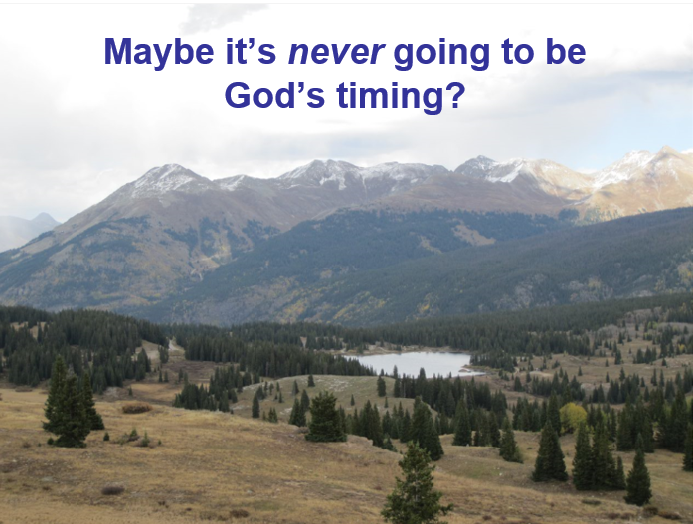
That night I wrote “optimistically” (ha ha) in my writing journal: I don't know if I have the time or the energy or the inclination for this. I'm not sure if I should keep beating my head against a wall. Maybe it's just not God's timing for me to be published. Maybe it's NEVER going to be God's timing.
But join I did, and Tina kicked things off with pre-meeting homework of hard-hitting questions for which we were asked to write a “dig deep” paragraph or two, including: How badly do you want to sell? How close are you to giving up? What are your fears? Where is God in all of this?

Here’s what I wrote in my writing journal as I mulled over the questions before fleshing-out the requested response:
What are my fears? On good days when I'm rested, I have NO FEAR. On days when I'm exhausted from the day job, I have BUCKETSFUL.
Fear # 1: That I've wasted a lot of years pursuing something that isn't in God's plan for me and missed out on the things I should have been doing and am better equipped to do. (The dream started in grade school—and I spent decades off and on writing toward that dream that wouldn’t go away.)
Fear # 2: That I'm deluding myself in thinking I will ever have what it takes to be successfully published. It's one thing to win a contest with opening chapters--but am I capable of writing solidly constructed, entertaining stories throughout? If I am, can I sustain that in book after book?
Fear # 3: That being published will only add more stress to my life than I can deal with and demand more time than I'm at liberty to put toward it.
Fear # 4: That I’ll sign a book contract—and be incapable of producing a book on deadline.
Fear # 5: That I’ll disappoint my readers.
Where is God in all of this? Somewhere out there...God refuses to take “The Dream” away from me even though it's been offered up time and time again, so I must assume there are things I have to do and become first.
Our little band of “Plan B-ers” read each other’s “essays,” then met in a virtual chat room to discover that all of us had so much in common with our responses. Fear that we weren’t good enough, that we were seeking something outside God’s will, that there was something we weren’t “getting” that was holding us back. How REAL those fears felt!
Going forward we committed to praying for each other, shared daily scriptures, offered encouraging feedback, took on-line classes, and listened to a CD by a published writer on not giving up. We paired up to read and critique each other’s manuscripts, re-evaluated what we were currently writing and targeting, shared articles on the writing craft, researched publisher guidelines for “best fit” for what we wanted to write, and learned how to better utilize contests.


Throughout those intense weeks of digging deep, refocusing, and re-launching ourselves, Tina kept asking Dr. Phil-like regarding our earlier, unsuccessful efforts: So, how’s that been working for you? And always she encouraged us to pray for each other, seek God’s clear direction, and to THINK OUTSIDE THE BOX we’d found ourselves trapped in.

That beginning jump-started the straggling-behind Seekers. And the rest, as they say, is history! Today all of us are published.


Do some of those original fears STILL linger? Are some of them realities that continue to challenge us? Oh, yes. But you know what? Many of those fears were False Evidence Appearing Real—fears that I could have easily allowed to hold me back from even trying. Looking over the past decade reminds me that God is in charge. My writing is His to do with as He pleases, so I’m deeply grateful for doors He opened to share my stories with the world.
God doesn’t promise to make all our “dreams” come true, but I believe He does plant certain dreams in our heart that He wants to fulfill--if we cooperate. Different journeys for different people. But, as the saying goes, God can’t steer a parked car. I must trust Him, look to Him for guidance, listen for His answers, and prayerfully step out daily to do my part. He can’t sell a book that’s never written.


If you're a writer, please share with us today where were YOU were on your writing journey 10 years ago when Seekerville first opened its doors! What were your hopes and dreams for your writing? Your fears? How far have you come since then?
If writer OR reader, when and how did you discover Seekerville? (Some of you, I realize, may have been in grade, middle or high school when Seekerville launched!) Why do you stick around?
If you’d like to be entered in a drawing for a $25 Amazon gift card along with a Kindle-copy of one of my books (your choice), please mention it in the comments section!
NOTE: The photos shared in today’s blog are from a late September trip on the Durango-Silverton Narrow Gauge Railroad in Colorado!

Glynna


GLYNNA KAYE treasures memories of growing up in small Midwestern towns--and vacations spent with the Texan side of the family. She traces her love of storytelling to the times a houseful of great-aunts and great-uncles gathered with her grandma to share candid, heartwarming, poignant and often humorous tales of their youth and young adulthood. Her Love Inspired books—"Pine Country Cowboy” and “High Country Holiday”—won first and second place, respectively, in the 2015 RWA Faith, Hope & Love Inspirational Reader’s Choice Awards. Just out in May 2017 was “The Nanny Bargain,” out now is “Mountain Country Cowboy,” and coming in April 2018 will be “Mountain Country Courtship” (the final story in the 6-book Hearts of Hunter Ridge series).

Mountain Country Cowboy. When he’s offered a job at Hunter’s Hideaway, single dad Cash Herrera immediately accepts. It means the former bad boy can start over and gain custody of his son, Joey. Still, small-town folk have long memories—especially Cash’s pretty childhood nemesis. Rio Hunter is now a lovely, courageous woman…and Cash’s new boss. Past betrayal makes them both wary, and Rio’s secret promise will soon take her away from Hunter Ridge. Yet working with Cash and teaching Joey about her beloved horses draw her closer to both. Can she create a loving family with the man who’s claiming her future?
BUY HERE


Birthday Greetings from Seekers Sandra Leesmith and Glynna Kaye!

Thursday, September 21, 2017

Five "Fun Size" Pre-Writing Starters to Ground Your Story


How thrilling it is as a writer to settle your fingers on the keyboard and type “Chapter One.” But even when filled with the exhilaration of new-story-itis, starting a book-length endeavor can often be intimidating.
Whether you’re a plotter, a seat-of-the-pantser or something in between, it never hurts to launch out on a story journey with a roadmap in hand (or at least in your head). Yes, you might take some detours along the way, but giving serious thought to your destination in advance can pay off in the long run.
I find nailing down 5 core elements before I start writing helps immensely, and I try to approach them as FUN, not something that will strangle my story-telling freedom. In fact, I find working through “fun size” starters actually energizes my storytelling confidence and enhances my writing freedom.

·       Goal, Motivation, Conflict (GMC)

·       Story Concept

·       Story Premise

·       Moral Premise

·       500-Word Synopsis

For me, none of these “fun size” starters are stand-alones. I can start out with any of them and they feed off each other. If I’m trying to decide whether ideas have enough “umph” to carry them from beginning to end, I’ll run them through a few of these “filters” to see how they hold up.

It doesn’t take long to throw a few less promising ones back into the idea ocean—and for one or two of them to catch my imagination as possibilities. Once I’ve decided on the core idea, then I move back and forth among the five elements—playing, building, tweaking—until the idea solidifies into a story I’m excited to tell with an engaging beginning, rock-solid middle, and a satisfying end.
Goal, Motivation, and Conflict (GMC) – We all know how important it is for our protagonists to possess GMC. Lacking even one of them—or having a weak one—seriously sabotages our efforts. Into this GMC bucket, I like to throw giving thought to greatest flaws and fears—and the source of them, the worst that could happen if goals aren’t met, the lie my characters tell themselves, and how they will change by the end of the story. It’s fun, too, to give them a secret!
To get the juices flowing on GMC, I often simultaneously play around with the other 4 elements—and I do mean PLAY. This is a fun way to make the development of GMC somewhat less painful. I’m not one of those gifted writers to whom a full-blown story appears in my mind like a big screen movie and I just transcribe what I see. Coming up with a viable story can often be grueling, so anything I can do to break the struggle into more “fun size” pieces, the better things go.

Story Concept – There are a lot of conflicting definitions regarding concepts and premises, etc., but for my own purposes I personally like to think of the concept as the 1-liner idea that first sparked my imagination. The very high-level story question. For instance, this is where my upcoming April 2018 release, “Mountain Country Courtship,” started:
Can an abandoned-at-the-altar city guy and a small-town runaway bride find the home of their hearts in each other’s arms?
Not a lot of detail there, but it hints at conflict…and romance.
Story Premise – I think of the story premise as more detailed, involving a little GMC and plot. Again, this is not a “textbook” definition of the word – this is just what I do when I’m trying to get a grip on a new story that’s formulating in my mind. This was one of my first shots at it for the same book:
With opposing agendas and a mutual need to prove themselves, an abandoned-at-the-altar city guy and a small-town runaway bride are stuck working together renovating an old bed & breakfast inn as they race to beat the clock to accommodate an all-important wedding that could make or break their future—and their chance at love.
Just added some detail that made me give further thought about GMC and plot.

Moral Premise – I like to think of this as what the core of the story is REALLY about under the surface of the action and dialogue. Knowing this as you write can greatly strengthen the story as you subtly weave it into your scenes.
Wrestling the steering wheel away from God in order to control life’s outcomes leads to directionless confusion and distancing from love. Turning the wheel over to God leads to inner peace and room for love.
This moral premise established for me the characters’ current inward state—and how they need to change.

500 Word Synopsis – 500 words is about one single-spaced page or two double-spaced, so you must stick to the bones of your story. It forces me to pull the other “fun size” pieces AND critical plot points together to reveal if the story holds together for the long haul.
This mini-synopsis quickly spotlights areas that are weak, that haven’t been thoroughly thought through, and that aren’t yet solid enough to carry the story successfully to The End. Discovering those things early on with a 500-word investment (and performing needed triage) is so much better than getting blind-sided halfway through writing the book.
For a seat-of-the pants writer, this short synopsis on the page or in your head may be all you need to get rolling. For a plotter or planster (or a pantser who must submit a full-blown synopsis with a book proposal), it’s a great foundation for writing a longer, more detailed synopsis.
Keep in mind that when I’m playing around with these “fun size” starters I’m not trying to make the elements perfectly written for anyone else’s inspection and critique (although I have at times polished up some of them to use in a proposal or to flesh out my publisher’s art fact sheet questions). For everything but the synopsis, I’m usually sitting somewhere away from the computer with a blank newsprint pad on my lap and letting my pen flow as the ideas come.
For me, spending a little upfront time solidifying the high-level plot and characters—while having a bit of FUN—can make all the difference in the world as to how I approach Chapter One…and journey successfully on to The End.

Please share with us today how much YOU need to know before you start writing in earnest. Do stories come to you full blown and ready to transcribe as the “movie” rolls through your mind? What, if any, pre-planning do you do? How do you get your ideas to “gel” enough to determine if they hold sufficient substance for a book-length story?
If you’d like to be entered in a drawing for a copy of my latest release, “Mountain Country Cowboy,” please mention it in the comments section!
Glynna

GLYNNA KAYE treasures memories of growing up in small Midwestern towns--and vacations spent with the Texan side of the family. She traces her love of storytelling to the times a houseful of great-aunts and great-uncles gathered with her grandma to share candid, heartwarming, poignant and often humorous tales of their youth and young adulthood. Her Love Inspired books—"Pine Country Cowboy” and “High Country Holiday”--won first and second place, respectively, in the 2015 RWA Faith, Hope & Love Inspirational Reader’s Choice Awards. Just out in May 2017 was ”The Nanny Bargain,” out now is “Mountain Country Cowboy,” and coming in April 2018 will be “Mountain Country Courtship” (the final story in the 6-book Hearts of Hunter Ridge series).
Mountain Country Cowboy. When he’s offered a job at Hunter’s Hideaway, single dad Cash Herrera immediately accepts. It means the former bad boy can start over and gain custody of his son, Joey. Still, small-town folk have long memories—especially Cash’s pretty childhood nemesis. Rio Hunter is now a lovely, courageous woman…and Cash’s new boss. Past betrayal makes them both wary, and Rio’s secret promise will soon take her away from Hunter Ridge. Yet working with Cash and teaching Joey about her beloved horses draw her closer to both. Can she create a loving family with the man who’s claiming her future?

BUY HERE NOW!

Friday, June 16, 2017

Best of the Archives. Getting There From Here: 5 Ways to Jump-start That Opening Chapter

This post by Glynna Kaye first appeared in Seekerville on October 24th, 2012. Comments are closed today to catch up on our writing and reading.

Glynna here! This is a post I wrote almost 5 years ago, just as my fifth book was coming out. I’m working on #14 now and this topic is STILL a critical reminder for me with each and every book.
 

You’ve finally finished the book and are eager to send it to an editor or agent. But you rein yourself in, deciding to run your opening chapter by contest judges or a few trusted friends for feedback. Who wouldn’t relish the opportunity to bathe in the oohs and aaahs your masterpiece will elicit?
.
But then...
.
“The opening didn’t grab me.”
.
“This is a sleepy first chapter.”
.
“I don’t like the heroine/hero.”
.
“I was confused.”
.
“It wasn’t clear what the story is supposed to be about.”
.
OUCH! That’s not at all what you expected.
.
As you’ve probably heard many times, an editor or agent can often tell within the first five pages--and certainly by the end of the first chapter--if a book has what they and their readers are looking for. Yes, sometimes a rare editor/agent might request a full manuscript based on a query alone and “soldier on” through a lame opening, be delighted with the story, and offer a contract contingent on the author working with them to give the opening chapter a major makeover.
.
But more often than not, few in the publishing industry will have the opportunity, time or desire to view your completed work of genius if it’s hidden behind a less than stellar opening chapter. Most ask first for a query. If the query’s concept grabs them, then they ask for a first chapter or maybe a proposal (3 chapters and a synopsis). Only if the opening catches their interest will they ask to see the entire manuscript. First chapters must GLOW.
.
So today, let’s chat about FIVE ways to “get there from here” -- how to impart fresh or renewed energy into that opening chapter. 
.
“The opening didn’t grab me.” Go to Walmart or Barnes and Noble and pull a few books off the shelf. Take a look at those first lines. Do some invite you to read on? Do you stifle a yawn as you place others back on the shelf? “Well,” you might say, “so-and-so-bestselling author doesn’t have great opening lines.” True. But most of us aren't yet in competition with that bestselling author whose loyal readership trusts they’ll “get to the good stuff” soon enough. You’re in competition with other aspiring writers to grab an agent’s and editor’s attention. They receive THOUSANDS of queries and submissions a month. Take time to make that first line and paragraph stand out from the crowd.

.
“This is a sleepy first chapter.” Many times it’s because, well, nothing HAPPENS on the page in front of us. I don’t mean that you need to blow up a car, sweep through town with a tornado, or have someone pull a gun on your heroine. I mean that the characters aren’t engaged in dialogue or an activity that holds reader interest. The reader isn’t plopped into the middle of a conflict as the story opens. Instead, they’re watching the heroine gaze out the window as she ruminates, page after page, on what has led her to this very moment. Nothing slows down your opening chapter like a lengthy walk down memory lane. Keep it short and sweet--just enough to clearly anchor your reader. Sprinkle it in gradually on a need-to-know basis throughout the book. You may be surprised to learn that the reader doesn’t need to know every single detail of your character’s past that you do.
.
“I don’t like the heroine/hero.” Very likely it’s because we haven’t laid the groundwork for our hero or heroine to elicit reader empathy. We haven’t made them three-dimensional. We may have an irritatingly angry heroine on page one, but haven’t slipped the reader into her head to hint at the whys of her behavior. We haven’t shown her doing something kind or considerate for another. We haven’t seen her from another character’s point of view who understands, likes and admires her. We haven’t given her a goal or motivation that readers can relate to.
.
“I was confused.” Sometimes we know our own stories so well and have so much of it “all in our head” that we forget the reader doesn’t have that advantage unless we’ve plainly put it down in words. Make a point of establishing time and setting. Take care not to let your dialogue be reduced to “talking heads” without description, motion or emotion. Make it very clear, through deep point of view techniques, which character’s eyes we’re seeing a scene through. Don’t throw too many characters into the opening chapter so that readers have difficulty distinguishing between all the names and faces. Introduce them gradually.
.
“It wasn’t clear what the story is supposed to be about.” You’ve heard of GMC, right?
Goal. Motivation. Conflict. What goal/dream is this character out to attain? What motivates them to work toward this goal? What stands in their way of achieving it? These questions are critical to an opening chapter, even if the initial GMC changes as the story gradually unfolds. You don’t have to fully disclose the deepest motive that will be revealed further along, but you can hint at it or provide a current motive that the reader will empathize with. Perhaps the hero himself believes his goal is one thing and he’ll later learn that it’s another. Or the opening conflict might only be the tip of the true iceberg. But that opening chapter needs to pose questions in a reader’s mind so that they are assured the story has a point and that it’s not going to wander aimlessly. They want to cheer on the hero and heroine and be able to recognize when the goal has or has not been achieved.
.
What unexpected feedback on an opening chapter have you received from contest judges or a critique partner? What did you do to fix it? What other ways might you jump-start your opening chapter?
.
By the way, I’ll let you in on a little secret... ALL of these points are comments I received from judges when, years ago, I first started entering contests for feedback!

Glynna


GLYNNA KAYE treasures memories of growing up in small Midwestern towns--and vacations spent with the Texan side of the family. She traces her love of storytelling to the times a houseful of great-aunts and great-uncles gathered with her grandma to share candid, heartwarming, poignant and often humorous tales of their youth and young adulthood. Her Love Inspired books--Pine Country Cowboy and High Country Holiday--won first and second place, respectively, in the 2015 RWA Faith, Hope & Love Inspirational Reader’s Choice Awards. “The Nanny Bargain” is on the shelves now, and coming in October is “Mountain Country Cowboy.”


The Nanny Bargain. Concerned for his orphaned twin brothers, outdoor-gear shop owner Sawyer Banks urges new employee Tori Janner to apply for the nanny position their grandparents are advertising…and spy for him. With plans to start over in Hunter Ridge and dreams of reviving her quilting business, Tori takes the job—but refuses to report to Sawyer unless the boys' welfare is in danger. But soon it's her own heart that's in jeopardy. Because after spending time with the committed bachelor, she starts to see the depth behind his easy charm—and begins to imagine herself as his wife…  Order Here!

Wednesday, April 26, 2017

Flying at Night: The Search for Your Story's Core


There you are, flying at thirty-five-thousand feet above the earth on a cloudless, moonless night, and even with interior lights dimmed you can’t see much more out your window than the blinking of a wing light or a single far off pinpoint glimmer below. Your own faint reflection obliterates the stars.
It’s a perfect time to think about your latest story idea--which for some reason just isn’t coming together.
Ideas are wonderful. Those as yet indefinite, unformed conceptions can be found everywhere around us and are limited only by our imagination. So many choices. So much potential to be tapped into! But sometimes, even after you begin to develop those brilliant ideas into plot points, to dream up scenes and wedge them into a logical order, to give the hero lovable quirks and a decent external goal to strive for, deep down you may sense something isn’t quite right.
Despite the twists and turns and quirky characters you’ve incorporated into what you’re thinking might even be a “high concept” idea, the story may feel wooden, flat, and ho-hum. It’s as if something vital is missing. Maybe the pieces are coming together on the plot, you’re applying the recommended craft “rules”--but where’s that spark that brings it to life? The ember that ignites your enthusiasm and generates the energy required to write all the way to The End?
Maybe you’re even beginning to fear that this uncertainty, this feeling that you’re flying in the dark will be picked up on by readers--readers who will lose interest halfway through the journey you’ve placed before them and reach for the remote.
There could be lots of reasons for this nagging impression. Maybe it’s an undercurrent of concern that the scope of the story is beyond your ability or experience to tell it. Perhaps it requires more research than you have the time or inclination to tackle. You’ve bit off more than you can chew.
OR MAYBE it’s just that you simply need to re-examine the CORE of your story. Perhaps you need to not only think about “all this stuff happens to them when Dick and Jane search for the treasure,” but what do Dick and Jane learn about themselves as they search for the treasure? How does this search change them, grow them? What can they do or be at the end of the story that they couldn’t possibly have done or been at the beginning? Maybe you need to spend time going deeper and thinking about what the story is REALLY about--what the “takeaway” is that will linger in a reader’s mind long after the last page is reached.
To do that, let’s fly a bit closer to earth. Get back down to a level where you were just beginning to gain altitude for a long writing flight where ideas--like lights sparkling below—appeared as endless handfuls of glowing diamonds scattered across a field of black velvet. As with basic story ideas, character growth ideas are endless. Again, so many to choose from, but choose you must to pin down the heart and sustaining substance of your story.
So where do you begin? I always ask myself questions.
- Who is it you most admire and why do they inspire you? Have they always been that way? If not, how did they get to where they are now? Share those insights with your hero.
- What specific issues and character flaws do you see the world around you struggling with? What would need to happen deep inside to bring about positive change? Are these things your hero could also struggle with, an area of needed change?
- What personal character challenges do you wrestle with? How would you like to change? What steps can you take—or what circumstances might lead you—to grow? What lessons has life taught you or is currently teaching you? Give those same challenges and life lessons to your hero.
- What truth is your hero blind and deaf to--something he’s rejected either consciously or unconsciously?  Are others aware of it?
- What lie / misbelief does your hero hold about himself? About others?
- What will happen to your hero, to others, and to the story itself if he doesn’t change? What will happen if he does?
In answering some of these “core” questions as they relate to your own story, do you feel a little less as if you’re flying in the dark of night? Do you feel some substance to your story beginning to surface? A glimmer of light?
 
Of course on that final page of your manuscript you can’t simply wave a wand over your hero to make his inner transformation magically happen. You need to incorporate character growth into your entire story. What needs to happen to bring it about? Weave that in around the plot points you’ve given so much thought to. Readers want to experience the inner struggle as much as the outer one, to be a part of the change as it comes about. To see it illustrated at the end.
- At what point does the hero recognize his shortcomings, misbeliefs, the need to change?
- What events can you build into the story to bring about the hero’s needed change in behavior, attitude or beliefs?
- How can you illustrate this change as the story progresses and how will it make a difference in how the story ends?
Today please share in the comments section what, as a reader, your thoughts are on are on the importance or unimportance of character growth in the books you most enjoy. As a writer, do you consciously incorporate character growth into your story? Is it a forethought or an afterthought? What tips and tricks can you share with us regarding how you satisfactorily illustrate a character’s growth?
If you’d like to be entered in a drawing for a copy of my May Love Inspired release, “The Nanny Bargain,” mention it in the comments section, then check the Weekend Edition to see if you’re a winner!
Glynna
 
GLYNNA KAYE treasures memories of growing up in small Midwestern towns--and vacations spent with the Texan side of the family. She traces her love of storytelling to the times a houseful of great-aunts and great-uncles gathered with her grandma to share candid, heartwarming, poignant and often humorous tales of their youth and young adulthood. Her Love Inspired books--Pine Country Cowboy and High Country Holiday--won first and second place, respectively, in the 2015 RWA Faith, Hope & Love Inspirational Reader’s Choice Awards. “The Nanny Bargain” is on the shelves now, and coming in October is “Mountain Country Cowboy.”
Concerned for his orphaned twin brothers, outdoor-gear shop owner Sawyer Banks urges new employee Tori Janner to apply for the nanny position their grandparents are advertising…and spy for him. With plans to start over in Hunter Ridge and dreams of reviving her quilting business, Tori takes the job—but refuses to report to Sawyer unless the boys' welfare is in danger. But soon it's her own heart that's in jeopardy. Because after spending time with the committed bachelor, she starts to see the depth behind his easy charm—and begins to imagine herself as his wife…

Wednesday, March 29, 2017

Speedbo Countdown! Getting Yourself to The End with a "Quick Win"


Here we are, only a few days before March’s book-in-a-month Speedbo challenge ends. Where did the time go?
.
If you participated, right about now you’re probably feeling one of the following:
.
Triumphant: Woo hoo! Things are going great beyond your wildest dreams!
.
Enjoying Yourself: You’re not quite “there” as far as meeting your goal, but you’ve made respectable strides and, above all, you’re having a little FUN!
.
Sorta Enjoying Yourself: This was harder than you imagined it would be, BUT you’re making some progress that feels good. Most days, anyway.
.
Not Enjoying Yourself Much At All: You bit off more than you can chew by setting unrealistic expectations. So no matter what progress you’re making, you find yourself comparing it to the original (maybe misguided?) goal--which steals away your sense of accomplishment no matter how far you’ve come.
.
Bottomed Out: Anything that could go wrong, went wrong. Kids (or you) got sick. Day job overtime skyrocketed. Your computer caught a virus. You wrote yourself into a story corner and can’t find your way out. Or you stumbled across a published book with a similar storyline and the other author wrote it far better than you think you’ll ever be able to.
.
Maybe you’re feeling a combination of ALL of the above!?
So, with just a few days of March remaining, how can you end the month on a positive note no matter where your feelings are at the moment?
.
Putting things in perspective is a given. The world doesn’t end on March 31. But what if you haven’t even come close to where you’d hoped to be and feel as if you’ll be limping across the finish line? Or you’ve ALREADY thrown in the towel?
.
That’s where establishing a “Quick Win” for these final days may make all the difference in how you feel about this month’s efforts.
.
Yeah, “quick wins” are customarily established at the beginning of something—say, for a new employee or a new project to get things rolling on a positive note. It serves as a motivator and fends off frustration. But there’s no law that says that even though you may be weary and even a little bit disappointed in your progress that you can’t set a “quick win” here at the midnight hour.
Time’s limited, of course, so it’s important to be level-headed. No letting your eyes get bigger than your stomach stuff. You need to rationally pick a realistic mini-goal that you know you can complete, one that will energize you. One that is FUN. One that no matter how successful or less than successful this month’s efforts have been, it’s something that will leave you crossing into April with a smile of satisfaction.
.
As Seeker Tina always points out “What have you done TODAY to make your dream come true?” What’s a dream “quick win” that will spark your imagination and energize you for the final days of Speedbo?
.
It may—or possibly may not (GASP!)—be related to your original goal.
.
It could be pushing on to write The End. Or skipping ahead to write the First Kiss or The Black Moment or the final scene. Maybe it’s drafting a query letter to an editor or agent. Maybe it’s writing a back cover blurb for your story—just for fun. Maybe it’s polishing up that first chapter. Or brainstorming titles. Or…or…or….
.
It’s up to YOU. Will you slink out of the month…or gallop into the next?
Please share with us today where YOUR feelings are about the past month. What is a “quick win” you plan to apply to the remaining days of the Speedbo challenge? Any advice you can offer to those who are feeling discouraged about the level of their own progress? Any ideas they could apply for a “quick win”?
.
If you’d like to be entered in a drawing for a copy of my next Love Inspired, “The Nanny Bargain,” mention it in the comments section, then check the Weekend Edition to see if you’re a winner!
.
Glynna
.
GLYNNA KAYE treasures memories of growing up in small Midwestern towns--and vacations spent with the Texan side of the family. She traces her love of storytelling to the times a houseful of great-aunts and great-uncles gathered with her grandma to share candid, heartwarming, poignant and often humorous tales of their youth and young adulthood. Her Love Inspired books--Pine Country Cowboy and High Country Holiday--won first and second place, respectively, in the 2015 RWA Faith, Hope & Love Inspirational Reader’s Choice Awards. Appearing on the shelves later in April is “The Nanny Bargain” and in October 2017 “Mountain Country Cowboy.”
.
The Nanny Bargain. Concerned for his orphaned twin brothers, outdoor-gear shop owner Sawyer Banks urges new employee Tori Janner to apply for the nanny position their grandparents are advertising…and spy for him. With plans to start over in Hunter Ridge and dreams of reviving her quilting business, Tori takes the job—but refuses to report to Sawyer unless the boys' welfare is in danger. But soon it's her own heart that's in jeopardy. Because after spending time with the committed bachelor, she starts to see the depth behind his easy charm—and begins to imagine herself as his wife. Pre-order HERE!

Wednesday, February 22, 2017

Training vs Trying: The Benefits of Perspective


There it is…looming up ahead. The lofty heights of Mount Speedbo!
.
With only a week remaining until Seekerville’s annual writing challenge takes off to climb that peak, it seems everyone in the Village around you is milling eagerly at the starting line. Stretching muscles. Bouncing on the balls of feet. Fist-pumping and -bumping. Enthusiasm permeates the air. Woo Hoo! Let’s get this show on the road! Everyone is ready to leap across the starting line.
.
EXCEPT YOU.
.
Didn’t think we’d notice, did you?
.
Sure, we’ve seen you do a few fist-pumps, throw out words of encouragement to your fellow Villagers. Talk the talk. But deep down, doubt weighs heavily.
.

Maybe you signed on in previous years and were pleased with the results. But this year…can you really expect the same—or even better—results? Are you setting yourself up for disappointment if you try it again? You suppose, though, that if you try harder
.
Could be you’ve tried the challenge before and were disappointed in the results. You didn’t even come close to meeting the goals some Villagers set and achieved. You didn’t get the book done or revised as you’d hoped—and maybe you still haven’t despite a year’s passing. Yeah, you signed up again, but is there any REAL hope things will be different from the last time? Maybe if you just try harder
.

Or maybe you’ve never given Speedbo a shot, choosing to observe from the stands and cheer others on. But this year you’ve taken the leap and signed on despite serious reservations. Man, do you ever hope this isn’t a mistake. That the month won’t be just like any other month in the past year when you can’t find the creativity, time or energy to write and everything that can go wrong will go wrong. But maybe you could try harder...
.
Could be, too, that you’ve never tried Speedbo at all, and have no intention of doing so this year. You’d be setting yourself up for failure, right? What’s the point in trying?
.
 .
Are any of these scenarios where YOU find yourself today as a month-long stretch of SpeedBo draws near?It seems to me the word “try” has gotten a bum rap. Webster’s defines it as an experimental trial. An attempt. To subject to something that tests the powers of endurance. But somewhere along the line the word “try” has taken on the implication of a weak, half-hearted struggle where there’s little or no expectation of meeting with any success. Don’t get your hopes up.
.
How many times have you observed children, when challenged to do something, give a heavy sigh accompanied by an exaggerated eye-roll and a shoulder-slumped, doubt-filled “Well, I’ll TRY”? The message is clearly “I don’t expect much and neither should you.” Such a shame that a courage-laden word like “try” has been reduced to such as that. Is that little word intimidating you?
.

If you haven’t noticed before now, our brains can be contrary at times. Occasionally we have to push them out of their well-worn ruts. Point them in a new direction. Not “I have to do this,” but “I get to do this.” Not “I dread doing this,” but “I’m eager to do this.” Likewise, what if, as you face a month of Speedbo, you mentally stop the negatively emotion-laden “Well, I’ll TRY” in its tracks? What if you change your perspective on the month ahead with a simple word substitution?
.
Not a month of TRYING, but of TRAINING?
.
Training to get your writing muscles in shape for the future. Training to build your creative endurance and repertoire of writing skills. Training to learn how to overcome obstacles that hold you back from reaching your writing goals. Seeing the month not as a futility-laden, emotionally-distorted TRY but as a work-out process, a time of preparation for the future of your writing as much as an immediate goal.  Does that take a little of the trying harder pressure off?
.

Yes, by all means, set a tangible goal to shoot for. Something that stretches you a bit, but is realistic. A word count, finishing or revising a book. Writing a novella or a short story. Completing a contest entry or a book proposal for submission. But why not put a positive mental and emotional spin on it—see Speedbo as an opportunity to TRAIN versus try-and-sigh?
.
I challenge you today to give some thought to how a simple word switch – TRAIN WISELY rather than try harder – might make a difference in how you approach the coming month. Discard the fear, discard the dread, and approach Mount Speedbo with growing hope and determination. Then throughout the month continue to coach yourself that you’re in training, educating yourself, exploring new territory, building the muscle of discipline and experience that will help carry you into your writing future.
.

Share with us today where you think your own doubts regarding Speedbo may be centered. Very likely there are other Villagers who are in the same boat with you who can offer encouragement. Or if you are currently doubt-free, did you at one time have any? How did you change your thinking? Your feedback could encourage others who are uncertain or who haven’t signed on to Speedbo yet.
.
If you’d like to be entered in a drawing for a copy of my May Love Inspired release, “The Nanny Bargain,” mention it in the comments section, then check the Weekend Edition to see if you’re a winner!
.
Glynna
 .
GLYNNA KAYE treasures memories of growing up in small Midwestern towns--and vacations spent with the Texan side of the family. She traces her love of storytelling to the times a houseful of great-aunts and great-uncles gathered with her grandma to share candid, heartwarming, poignant and often humorous tales of their youth and young adulthood. Her Love Inspired books--Pine Country Cowboy and High Country Holiday--won first and second place, respectively, in the 2015 RWA Faith, Hope & Love Inspirational Reader’s Choice Awards. Coming in May 2017 is “The Nanny Bargain” and in October “Mountain Country Cowboy.”
.
Concerned for his orphaned twin brothers, outdoor-gear shop owner Sawyer Banks urges new employee Tori Janner to apply for the nanny position their grandparents are advertising…and spy for him. With plans to start over in Hunter Ridge and dreams of reviving her quilting business, Tori takes the job—but refuses to report to Sawyer unless the boys' welfare is in danger. But soon it's her own heart that's in jeopardy. Because after spending time with the committed bachelor, she starts to see the depth behind his easy charm—and begins to imagine herself as his wife. PRE-ORDER HERE.