
So, the end of Speedbo is in sight. Some of us met our goals and some of us didn’t. Some of us wonder a bit wildly if we can cram 31 days of writing goals in to 3 days.
We’ve had pep talks, how-tos, craft posts, encouragement, and everything in between this month. As I looked back over the topics at hand, it was hard to come up with something that hasn’t been posted to encourage everyone to try just a bit harder, write a bit longer, and strive to reach their goals every day without fail.
With my own crazy schedule this month, I started writing this post at 3:30 in the morning because I couldn’t sleep. What can I say to encourage someone? What can I tell you that you haven’t heard before?

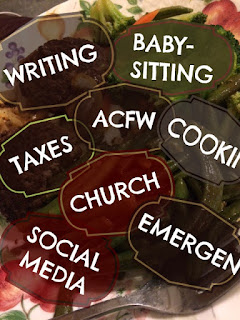
What else was on my plate at the beginning of March or was added during the month? Bookkeeping duties for three family businesses, and working as the treasurer for ACFW. Oh, and babysitting my how-can-any-child-be-this-perfect seven-week-old granddaughter as her mom goes back to work. A plum job opportunity fell into my daughter-in-law’s lap the middle of March, and since our sweet baby is too young to go to daycare, full-time babysitting fell to me for now. This bottleneck of stacked tasks will ease up in a few weeks, but I’ll still get to babysit my little darling part time while still keeping up with the bread-and-butter of work related tasks.
In addition, my meal planning has been very intentional for the last few months as my husband and I try to eat healthier. Like most anything else, healthy eating doesn’t just happen, it takes some planning.
And I forgot to mention that ACFW Conference registration opened on March 1st and contests closed for entries on March 15th, and as the treasurer, there’s always work to be done to keep the wheels turning smoothly there.
So far, we have writing, bookkeeping, meal planning, housework, babysitting, and the occasional two-am bovine labor-and-delivery emergency (yes, we were really up at 2 am delivering a baby calf this month) or errands for My Cowboy. My plate’s beginning to look like a platter!
If I look at the whole platter at once, I often wonder how I’ll get it all done...during Speedbo or EVER. Delegation, Dedication, and a Do-or-Die attitude is the answer. Not to mention a lot of prayer. I had to push a small portion of my March goals to the side of the plate. Other things had to be done immediately…the proposal had a hard deadline; the novella a hard deadline; the baby must be fed and changed. And rocked. A lot. That goes without saying! Tax returns on three businesses are due April 15th.
Oh, and if that isn’t enough, DST started this month. I wasn’t worth a plug nickel for THREE WHOLE DAYS after that. :(
And my Seekerville post (the one you're reading right now) was due March 29th. So, I typed the rough draft of this post at 4:30 in the morning because I was awake. Why lay in bed thinking about my post that when I could be up writing it? So up I got.
What I’m trying to say is that sometimes we have to burn the candle at both ends if we want something bad enough. Life isn’t going to stop while we write our novel.
It just isn’t.
Looking at my plate/platter again, I keep thinking (not for the first time) how cool it would be if I was uber organized and could eat a bite of each thing every day, rotating so that I have a nice balanced “meal” of writing 1000 words in the morning, then working an hour on social media, then an hour or two on business, and so on and so on, starting over the next day, keeping all the balls in the air at all times.
But, my days never seem to go that way. Invariably, I get broadsided by fires that have to be put out immediately, or looming deadlines and have to work until the wee hours of the morning to meet them.
Am I just not organized enough? Perhaps. Or perhaps I'm TOO organized, but I fight my own nature because it doesn't fit what's considered normal. Perhaps I work better under pressure, and gobbling one thing at a time on my plate is my work model rather than taking a bite of this, then that, then the other.
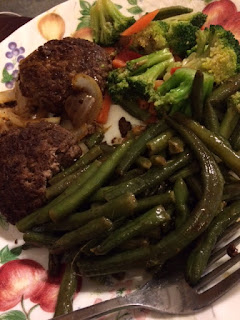
What do I mean? As a child, I was notorious for eating one thing at a time. I’d eat all my chicken first, then my bread, then my peas, then I might take a few sips of my tea at the end of the meal. I distinctly remember as a teen forcing myself to eat a bit of everything my plate and to sip on my drink so that my eating habits wouldn’t look so odd to others. Apparently, my parents didn’t think it was odd to eat just one thing at a time. I never remember them trying to correct or change me.
What does that say about me? Am I destined to gobble my favorite task all up before I move on to the next one? Will I never be able to have a balanced, healthy day of doing a little bit of each task so that I feel like I’ve accomplished something in each area that day?
Seriously, folks, I am NOT making this stuff up. As a matter of fact, after I wrote my post, I began to wonder if anyone had done any research on this. Turns out they had. I found an article on the Huffington Post regarding this very phenomenon. I just discovered that I'm an Isolationist, even though I trained myself to eat a bit of everything on my plate, it’s not my nature. Wow, there's a name for that? lol
But get this...


First, grab a plate off the sideboard. We’re about to fill it up with all our tasks for the month. I’ll start. Here’s what was on my writing plate this month. Turn in a proposal, finish and turn in a novella, and work on a contracted novel. I’m not as far along as I wanted to be, but I haven’t missed any deadlines, so that’s saying something.
What else was on my plate at the beginning of March or was added during the month? Bookkeeping duties for three family businesses, and working as the treasurer for ACFW. Oh, and babysitting my how-can-any-child-be-this-perfect seven-week-old granddaughter as her mom goes back to work. A plum job opportunity fell into my daughter-in-law’s lap the middle of March, and since our sweet baby is too young to go to daycare, full-time babysitting fell to me for now. This bottleneck of stacked tasks will ease up in a few weeks, but I’ll still get to babysit my little darling part time while still keeping up with the bread-and-butter of work related tasks.

In addition, my meal planning has been very intentional for the last few months as my husband and I try to eat healthier. Like most anything else, healthy eating doesn’t just happen, it takes some planning.
And I forgot to mention that ACFW Conference registration opened on March 1st and contests closed for entries on March 15th, and as the treasurer, there’s always work to be done to keep the wheels turning smoothly there.
So far, we have writing, bookkeeping, meal planning, housework, babysitting, and the occasional two-am bovine labor-and-delivery emergency (yes, we were really up at 2 am delivering a baby calf this month) or errands for My Cowboy. My plate’s beginning to look like a platter!
If I look at the whole platter at once, I often wonder how I’ll get it all done...during Speedbo or EVER. Delegation, Dedication, and a Do-or-Die attitude is the answer. Not to mention a lot of prayer. I had to push a small portion of my March goals to the side of the plate. Other things had to be done immediately…the proposal had a hard deadline; the novella a hard deadline; the baby must be fed and changed. And rocked. A lot. That goes without saying! Tax returns on three businesses are due April 15th.
Oh, and if that isn’t enough, DST started this month. I wasn’t worth a plug nickel for THREE WHOLE DAYS after that. :(
And my Seekerville post (the one you're reading right now) was due March 29th. So, I typed the rough draft of this post at 4:30 in the morning because I was awake. Why lay in bed thinking about my post that when I could be up writing it? So up I got.
What I’m trying to say is that sometimes we have to burn the candle at both ends if we want something bad enough. Life isn’t going to stop while we write our novel.
It just isn’t.
Looking at my plate/platter again, I keep thinking (not for the first time) how cool it would be if I was uber organized and could eat a bite of each thing every day, rotating so that I have a nice balanced “meal” of writing 1000 words in the morning, then working an hour on social media, then an hour or two on business, and so on and so on, starting over the next day, keeping all the balls in the air at all times.
But, my days never seem to go that way. Invariably, I get broadsided by fires that have to be put out immediately, or looming deadlines and have to work until the wee hours of the morning to meet them.
Am I just not organized enough? Perhaps. Or perhaps I'm TOO organized, but I fight my own nature because it doesn't fit what's considered normal. Perhaps I work better under pressure, and gobbling one thing at a time on my plate is my work model rather than taking a bite of this, then that, then the other.

What do I mean? As a child, I was notorious for eating one thing at a time. I’d eat all my chicken first, then my bread, then my peas, then I might take a few sips of my tea at the end of the meal. I distinctly remember as a teen forcing myself to eat a bit of everything my plate and to sip on my drink so that my eating habits wouldn’t look so odd to others. Apparently, my parents didn’t think it was odd to eat just one thing at a time. I never remember them trying to correct or change me.
What does that say about me? Am I destined to gobble my favorite task all up before I move on to the next one? Will I never be able to have a balanced, healthy day of doing a little bit of each task so that I feel like I’ve accomplished something in each area that day?
Seriously, folks, I am NOT making this stuff up. As a matter of fact, after I wrote my post, I began to wonder if anyone had done any research on this. Turns out they had. I found an article on the Huffington Post regarding this very phenomenon. I just discovered that I'm an Isolationist, even though I trained myself to eat a bit of everything on my plate, it’s not my nature. Wow, there's a name for that? lol
But get this...
Even more amazing is the description of an Isolationist regarding other areas of their life. It’s like these people used ME as their guinea pig for their research. Fascinating!

So, if you’re still with me on this wild and crazy zigzag of a post, let’s get down to the nitty-gritty. It’s okay to eat one thing at a time. And when possible, it's okay to finish one task before you go on to the next. There’s nothing wrong with spending days working on taxes/ social media/ cooking/ cleaning/ gardening/ day job, etc., and not even looking at your manuscript. But you still have to carve out big chunks of time to write if you want to get it done. I'm not giving you a license to procrastinate! If you're an isolationist, you might very well go dark for four or five days at a time to do nothing except write, especially if the deadline is looming. :)
Having said that, we know that a novel can’t be written in one sitting (aka meal) before we move on to something else. Apparently my nature is to write in marathon chunks that unfortunately include burning the midnight oil instead of short spurts of 1K every morning, as much as I would love to do that every day. That’s not to say that I can't be more intentional meeting that 1K a day goal. I changed my own eating habits, didn't I? Knowing why and how my brain operates is half the battle.
Are you an isolationist? If so, do you also have a “disciplined and border-line stubborn tendency to complete one task before moving on to another?”
And... we have prizes. When you comment, let me know if you'd like to be included in the drawing for a copy of The Power of Habit: Why We Do What We Do in Life and Business by Charles Duhigg. Specify paperback or ebook.
The Isolationist

Read the entire article here:
Huffington Post, 10/08/15
Also, for a more in-depth look at the different eating habits, read this article.
Also, for a more in-depth look at the different eating habits, read this article.
So, if you’re still with me on this wild and crazy zigzag of a post, let’s get down to the nitty-gritty. It’s okay to eat one thing at a time. And when possible, it's okay to finish one task before you go on to the next. There’s nothing wrong with spending days working on taxes/ social media/ cooking/ cleaning/ gardening/ day job, etc., and not even looking at your manuscript. But you still have to carve out big chunks of time to write if you want to get it done. I'm not giving you a license to procrastinate! If you're an isolationist, you might very well go dark for four or five days at a time to do nothing except write, especially if the deadline is looming. :)
Having said that, we know that a novel can’t be written in one sitting (aka meal) before we move on to something else. Apparently my nature is to write in marathon chunks that unfortunately include burning the midnight oil instead of short spurts of 1K every morning, as much as I would love to do that every day. That’s not to say that I can't be more intentional meeting that 1K a day goal. I changed my own eating habits, didn't I? Knowing why and how my brain operates is half the battle.
Are you an isolationist? If so, do you also have a “disciplined and border-line stubborn tendency to complete one task before moving on to another?”
And... we have prizes. When you comment, let me know if you'd like to be included in the drawing for a copy of The Power of Habit: Why We Do What We Do in Life and Business by Charles Duhigg. Specify paperback or ebook.


