
 |
| Winnie Griggs |
by
Winnie Griggs
Stakes are what drive
your story forward, what makes your reader really care about the ultimate
outcome. Simply defined, the stakes are the consequences your character will
face if he fails to achieve his goal. If there is nothing particularly
life-changing about those consequences, then your reader won’t have a reason to
care.
That being said, stakes
don’t have to be large in the general scheme of things, they just have to be
large to your protagonist. Because if the consequences for failure doesn’t
destroy your protagonist’s world in some way—be it physical, emotional or
spiritual—then the reader will begin to think so what, which can be the kiss of death for your story. Having the
kind of stakes that your reader can relate to, that allows the reader to
internalize the consequences of failure, is what ratchets up the story tension,
and story tension is what propels your reader forward through the book. In
other words, give your reader something in your protagonist’s world to root
for, and then put it at risk.
The stakes are what
fuels the tension and conflict in your story. And as you know, the higher the
tension, the more of a page-turner your story will be.

So here are a few tips
for keeping your stakes front and center:
· First and foremost,
make certain your readers know what the stakes are.
And the sooner the better. The longer you take to introduce the stakes, the greater the risk you run of losing or boring the reader.
And the sooner the better. The longer you take to introduce the stakes, the greater the risk you run of losing or boring the reader.
· Never completely remove
the stakes.
If you remove the stakes, you remove the sense of urgency from your story, in fact you rob it of all story tension. If you’re going to remove or resolve a particular story goal or a consequence of failure, make certain you’ve introduced something even bigger to take it’s place.
If you remove the stakes, you remove the sense of urgency from your story, in fact you rob it of all story tension. If you’re going to remove or resolve a particular story goal or a consequence of failure, make certain you’ve introduced something even bigger to take it’s place.

· Which brings me to - Keep
raising the stakes
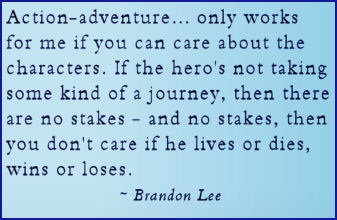
Your stakes should escalate in stages throughout your story. In other words, the consequences for your protagonist if he should fail to achieve his goal should become more significant as the story progresses, and at the same time, his chances of success should narrow. Turn it into a real nail-biter as you close in on the climax of your story. An added benefit from increasing the stakes is that it forces your character to make riskier and riskier choices. You should always be thinking how can I make this bad situation worse for my protagonist.

Your stakes should escalate in stages throughout your story. In other words, the consequences for your protagonist if he should fail to achieve his goal should become more significant as the story progresses, and at the same time, his chances of success should narrow. Turn it into a real nail-biter as you close in on the climax of your story. An added benefit from increasing the stakes is that it forces your character to make riskier and riskier choices. You should always be thinking how can I make this bad situation worse for my protagonist.
· Reinforce the stakes
occasionally
Despite what I said above, you won’t be able to raise the stakes in each and every scene. So when you’re not working on raising the stakes, you may want to reinforce them. Subtly remind the reader what the stakes are, or show some other aspect of the consequences that may not have come to light initially.
Despite what I said above, you won’t be able to raise the stakes in each and every scene. So when you’re not working on raising the stakes, you may want to reinforce them. Subtly remind the reader what the stakes are, or show some other aspect of the consequences that may not have come to light initially.
· Make your stakes
engaging
Your stakes need to really matter to the character in a way that engages the reader. But keep in mind, the stakes don’t need to be earth-shattering to do this. Internal stakes can be just as compelling if properly motivated—for instance, failing to get the job your character has set his sights on can be devastating to him, and vicariously to the reader, if he’s sacrificed for years to work his way up the ladder and has tied his entire sense of self-worth, or the future well-being of his family, to achieving that goal.
Your stakes need to really matter to the character in a way that engages the reader. But keep in mind, the stakes don’t need to be earth-shattering to do this. Internal stakes can be just as compelling if properly motivated—for instance, failing to get the job your character has set his sights on can be devastating to him, and vicariously to the reader, if he’s sacrificed for years to work his way up the ladder and has tied his entire sense of self-worth, or the future well-being of his family, to achieving that goal.
· Test your stakes by
asking so what
What would happen if the protagonist just walked away from his goal? Would there indeed be strong consequences and repercussions to that character? If not, then you don’t really have high stakes. This is true even if there are dire consequences to ‘nameless others’ in the story. Because stakes are all about personal loss and the reader connection. What the reader cares about, what they are investing their time and emotions into, is your protagonist.
What would happen if the protagonist just walked away from his goal? Would there indeed be strong consequences and repercussions to that character? If not, then you don’t really have high stakes. This is true even if there are dire consequences to ‘nameless others’ in the story. Because stakes are all about personal loss and the reader connection. What the reader cares about, what they are investing their time and emotions into, is your protagonist.

So
what are some ways to raise the stakes in your story?
·
Be
Clear On The Consequences
Make certain your reader understands the stakes. Even if you’re not ready to reveal all the repercussions, there should be a clear impression that the stakes matter.
Make certain your reader understands the stakes. Even if you’re not ready to reveal all the repercussions, there should be a clear impression that the stakes matter.
·
The
Stakes Should Be Personal
Having consequences that involve nameless masses is nowhere near as effective as having stakes that impact your protagonist personally. If you’ve done your job right, the protagonist is who your reader will identify with, who they will sympathize, with and you must give them a reason to worry about and root for them.
Having consequences that involve nameless masses is nowhere near as effective as having stakes that impact your protagonist personally. If you’ve done your job right, the protagonist is who your reader will identify with, who they will sympathize, with and you must give them a reason to worry about and root for them.
·
Use
Subplots To Fold In Additional Stakes
Subplots are a good way to introduce conflicts with smaller stakes that will keep things moving in Act Two of your story. And if you want to show your protagonist failing early on, this is a place to do it. But these additional stakes are most effective when they feed into and impact the major story stake in some way.

Subplots are a good way to introduce conflicts with smaller stakes that will keep things moving in Act Two of your story. And if you want to show your protagonist failing early on, this is a place to do it. But these additional stakes are most effective when they feed into and impact the major story stake in some way.

·
Escalate
Start with small but intriguing consequences, then allow them to snowball into something that grows bigger as the story progresses. If you pile it all into your opening scenes that leaves you nowhere to go.
Start with small but intriguing consequences, then allow them to snowball into something that grows bigger as the story progresses. If you pile it all into your opening scenes that leaves you nowhere to go.
·
Use
The Domino Effect
It’s the old cause and effect method. You want a logical escalation. Show how decisions – good or bad – that are made at each step of the way cause problems and escalation of consequences down the road.
It’s the old cause and effect method. You want a logical escalation. Show how decisions – good or bad – that are made at each step of the way cause problems and escalation of consequences down the road.
·
Most
Importantly, Show What Your Protagonist Must Sacrifice
Part of what’s at stake is that your protagonist will change in some way to reach their goal. And this will likely require a sacrifice on their part. Make certain, before the climax of your story, you have given us a view of how deep this sacrifice will be. You want to give your resolution as much power as you can to make the story satisfying to your reader.
Part of what’s at stake is that your protagonist will change in some way to reach their goal. And this will likely require a sacrifice on their part. Make certain, before the climax of your story, you have given us a view of how deep this sacrifice will be. You want to give your resolution as much power as you can to make the story satisfying to your reader.
So
what do you think? Are stakes something
you struggle with in your own writing?
Did these pointers help? Can you
think of things to add?
Leave a comment to get your name in the drawing for a copy of Journey to the Heart.
~~~~~~
 |
| Click To Buy |
The Road Home by Winnie Griggs
Anisha's life is just beginning, and Wyatt feels like his is over. How can a displaced, exotic beauty and former surgeon help two grieving orphans find a forever home?
Also in this collection The Gentleman’s Quest by USA Today bestselling author Camille Elliot
and...
The Trail Boss’s Bride by New York Times bestselling author Erica Vetsch
~~~~~~~
and...
The Trail Boss’s Bride by New York Times bestselling author Erica Vetsch
~~~~~~~
Winnie Griggs is a multi-published author who writes for Love Inspired Historical. Her writing has garnered enthusiastic reviews and numerous awards, including a recent RT Reviewer’s Choice Award.
Winnie spent her childhood in an undeveloped area her friends thought of as the very back of beyond. She and her two younger siblings spent many an hour exploring the overgrown land around her home, cutting jungle trails, building forts and frontier camps, and looking for pirate ships on the nearby bayou. Once she ‘grew up’ she found other outlets for dealing with all those wonderful, adventurous imaginary friends by filling notebooks with their stories.
Eventually she found her own Prince Charming, a rancher whose white steed is disguised as a tractor and whose kingdom is nestled in a small rural community she happily calls home. Together they’ve built their own storybook happily-ever-after, including four now grown children who share Winnie’s vivid imagination and her husband’s steadier influences and who are now out in the world pursuing their own adventures.
You can learn more about Winnie and her books at www.winniegriggs.com or connect with her on Facebook at https://www.facebook.com/WinnieGriggs.Author


