Showing posts with label Leslie Ann Sartor. Show all posts

Thursday, December 4, 2014

Writing a series? Keep it organized!

with guest Leslie Ann Sartor.

Have you ever thought about writing a series? Then, I beg you, start your "bible" now.

Don't wait like me, until I finished the first book and realized by the not-so-gentle nudging of a great friend, our own Audra Harders, that I had a series on my hands.

Worse, I have TWO series I'm working on and will start a cozy mystery series in 2016. Take pity on me now, please, or pray. It's going to be a crazy ride.

But now I know I'll start my cozy bible from the get go, the other two I have to build in the midst of writing the current novel which feels a bit daunting, but is crucial.

So just what is a series "bible"?

It's the document that is going to keep you from tearing out your hair.  



It's not only going to remind you of your character's eye and hair color, the dimple in his LEFT cheek and the tattoo on her RIGHT wrist. It's what we call in the film biz, continuity. It's making sure that not only do you have the house on the same side of the block, but you have the street name correct and the color of the car consistent. Nothing ruins a film faster for me or makes me close a book, perhaps never to open it again, by inattention to details.

BUT, there are more than physical aspects that need to be kept consistent -- deeper, more complex issues. I promise you these details, and others you come up with, will help build your story faster and keep correct the traits readers loved in the first place.

So let's dig in a little deeper. Here are some ideas to make notes about:
·         Endearments and how they're said. Darling or darlin'.
·         How does your character get mad? What is their hot button? (One of Reid Hunter's is anyone questioning his loyalty--he doesn't get mad, he retreats, the heck with them. But deep inside he's hurt.)
·         Do they drive fast? Irritatingly slow? (Brice Young—slow which frustrates Jennifer Malone who has a fast car and likes to drive it that way.)
·         What are their beliefs and what forces your character to reveal them?
·         What is the name of the boat or whatever—cottage, car, dog, cat, etc.? (This also makes sure you spell it the same throughout the books.)
·         Create a map of the area so X store is always next to Y store. And the house across the street is a red gingerbready style, not a Craftsmen bungalow.
·         Note landmarks that are used or could be used.
·         What are the characters' lineages? Don't want to blow that one. Keep a family tree going.
·         Save pictures that intrigued you about the story. Don't try and find them again. The internet is fickle. And if you cut them from a magazine, scan them in or take a photo.
·         Research sites. I have a ton, all in my files. And if something is important, I copy and paste the info. Some of those sites have moved much to my dismay.

Have I lost you yet?

I'm hoping your next question is…where do I put all this information? That is exactly your question? I have a few answers.

This part is actually really fun, it's like creating a detailed scrapbook.

I have a friend who literally makes scrapbooks with everything in them. All her notes, pictures, snippets of dialogue from experts talking…everything. I've seen them and I'm a bit—okay, a lot—envious. They're not those fancy 12x12 scrapbooks -- she uses composition books or notebooks, something that will hold a lot of stuff.

Some folks use Evernote to take "clippings" of their research. I like that idea. You can paste them anywhere.

Another great idea, and one I once used for all my research so it was in one place, is OneNote in the Microsoft Suite of programs. It's a one stop folder. Everything in one place.

What I'm using now is Scrivener. I'm creating a new binder just for this information. Because a lot of it is already in Scrivener, I can copy the folder and move it to the new binder, then add as a re-read my books and find what I need.

Friends don't let this happen to friends. That's why I'm writing this post!

What's most important is that you do what works for you. If you're super detailed and not messy, you'll find a method for you. If you're crafty you might use the notebook method. (It's tactile as well). But whichever method you use, it has to be simple to get to the information, or I doubt you'll use it much.

What do you think should be included?

And what method do you think you'd use?

I'm offering two Kindle copies of my latest book ForeverYours This New Year's Night to a couple of lucky commenters. (Please note this is a sweet romance, not an inspy)
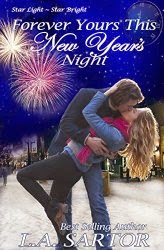
Jennifer Malone Can't Believe What's Happening To Her
How dare he? Granted she's far from home, dining alone on Christmas Eve. But that doesn't give Major Brice Young—the cocky man who'd out-experted her on a big cyber forensics case months ago—the right to invite himself to her table and then do what he did.
Brice Young Can't Believe He Did What He Just Did
Stupid move. Brice needs Jennifer Malone to be the beta tester of his new cyber defense program and he bet he'd just ruined his chances. Why on earth did he come here at all, let alone do what he just did? Would Jen still show up at tomorrow's meeting and agree to work with him on testing his new system?
Can Two Prior Adversaries Work Together?
Getting Jen to test his new system is Brice's priority until he discovers she is so much more than the icy cyber geek she portrays to the world. Jen fights to keep her distance, despite Brice's undeniable charm. There is no way she ever mixes business with pleasure, especially with a recently divorced man…or can magic happen on this New Year's Night?


Leslie Ann Sartor (aka L.A.Sartor) began telling stories around the age of 4 when her mother, at Leslie’s insistence, wrote them down and Leslie illustrated them.  As an adult she writes suspense and action adventure novels with a dash of romance, and screenplays—she's had a contracted adaptation!  She lives in Colorado with her husband whom she met on a blind date.  Leslie loves to travel and thinks life is an adventure and we should embrace the journey.  She has a blog and a mailing list.


AND, there's more...


Along with Leslie's generous gifts, there will be a couple more.

We'll be giving away winner's choice of one of these holiday books (e-version)!

Check the WE on Saturday to see if it's YOU!!

Thursday, December 5, 2013

A Novella for the Holidays


Audra, it's a pleasure to be back with Seekerville as your guest, you guys rock and I always have a blast here! Thank you.

I just released my third book; Be Mine This Christmas Night, and not a day or two later,  my husband brought to my attention an article from the Wall Street Journal titled "Torrent of Books on Way Before Holidays."

Thank you, sweetie, for showing me this. Not.

I began to second guess my decision to write this book. Why did I think I could compete? Why a Christmas book?  Why did I go with KDP Select for this one?

Doubts swirled and threatened to swamp me. Then I took a deep breath and remembered wise Tina's statement, indie publishing is not for the faint of heart (paraphrasing a bit here.)

I reminded myself that I wrote a wonderful Christmas story set in my hometown of Boulder, CO, which lights a star on Flagstaff mountain every season. To me the star symbolizes hope. Hope that seems to flare brighter during this season. Hope for mankind, for peace, for the light to shine into the darkness of hearts and into souls.

Which is the reason I wrote the book. It's not about the Boulder star per se, which does have a starring (sorry for the pun) role in the story, but stars themselves are an important element in the book, just as hope and wonderment, snow and holiday lights are important elements. Symbols of the season that heals hearts and fosters love in Be Mine This Christmas Night.

And that's why I think I can compete. Because I so believe in this story and in the season. This book simply had to be written.

Also it's dedicated to my brother with whom I spent so many wondrous Christmas mornings.  In Germany as babies and toddlers and the wonder of seeing a Christmas tree for the first time. In Pacific Palisades, CA, when our father would tramp in the fireplace ashes and onto the carpet, and we were sure they were Santa's boot prints. In Boulder, Colorado where we put our own star up on the chimney.  Memories that bring me happiness and hope.

And for my last doubt? Why did I go with KDP Select for this book and not the others? 

If you're unfamiliar with Kindle Direct Publishing Select, it means by choosing this program, that I can only sell on their site, Amazon (and all of them throughout the world) for 90 days. I have five free days if I wish to use them and I will, and I get paid if someone borrows the book, which to date I have none, darn it all. But I continue to hope.

So yes this means I can't put the book for sale anywhere else. I can have a paperback and do. So it is limiting…in a sense.

KDP Select is an experiment. I know that I must try everything marketing-wise that makes sense to me.  And I want to find out how this strategy will promote me, my stories and my writing. This season of hope and of light seemed the perfect time to do this.

Lending the book with the hope that people will love my writing and want the other two  books and spread the word about author L.A. Sartor was one goal.  And the other? That this story which will hopefully be read all year long will resonate  with each reader, that the light will shine, and with luck and faith, spread. That more people will buy it, fall in love with it and tell others, as word of mouth is the best sales pitch of all.

So why not try if I believe in the power of my story so strongly?

Be Mine This Christmas Night starts with the rhyme:

Star Light Star bright,
The first star I see tonight,
I wish I may, I wish I might,
Have the wish I wish tonight.

~ anonymous


Which is also the series name, Star Light ~ Star Bright. And that's what I'll be doing when I see the first star tonight. That and a bit of prayer.

 
Book Two of the series comes out in 2014 and Book Three, I don't know yet, maybe early 2015.

More chances, more risk, my heart is not faint.

Have a blessed Christmas.


Now for a question for you all.  Why did you think you could compete in this crazy world of publishing, of story telling?  What helped with your doubts.  I have a feeling I know part of the answer.
Leave a comment and be in the drawing for my KDP release of Be Mine This Christmas Night. Please keep in mind, this is not an Inspirational Romance, and does contain some mild adult content.

Bio:

Leslie Ann Sartor (aka L.A. Sartor) began telling stories around the age of 4 when her mother, at Leslie’s insistence, wrote them down and Leslie illustrated them.  As an adult she writes suspense and action adventure novels with a dash of romance, and screenplays—she's had a contracted adaptation!  She lives in Colorado with her husband whom she met on a blind date.  Leslie loves to travel and thinks life is an adventure and we should embrace the journey.  She has a blog: My Story, My Way ~ an Indie Adventure. She is also one of the Five Scribes.  Check out her website, www.lesliesartor.com. Connect with her on Twitter and Facebook

Titles published:
Dare to Believe (2012)
Stone of Heaven (May 2013)
Be Mine This Christmas Night (Holiday 2013)

 
The Children's Author …

Annie Hamilton's children's series Star Light~Star Bright is a mega hit. She loves kids and wants nothing more than a family of her own, but twice burned, thrice shy. When a gorgeous man with two young boys moves next door, Annie can't help but dream her impossible dream. 

And The Widower Who Moved Next Door …

Cole Evans is a brilliant scientist, but finds fatherhood a challenge. When his son develops a bond with their enchanting neighbor, the boy’s favorite author, Cole discovers just how much he's lost—and how much he needs. 

Will Their Wish Come True This Christmas Night?

Can Cole overcome family meddling and alleviate Annie's fears so they can be a ready-made family?

 
Buy Links:


Thursday, September 5, 2013

ON THE VERGE with Leslie Ann Sartor


ON THE VERGE

It seems like I've always been "on the verge" in my writing career.

On the verge of signing with an agent.

On the verge of signing a contract.

On the verge of having a script sold and produced.

On the verge of … almost anything that has to do with writing.

And frankly, I was sick to death of being on the verge and never being past / over / beyond "it."

One day, my husband brought into my office a Wall Street Journal article about Indie authors, and I realized that Indie Publishing was becoming more legitimate, in fact for some, even a preferred way of publishing one's book. The WSJ was printing articles weekly about Indie authors and the dollars / prestige they were earning.


Ah, ha! I was on the verge of creating my career as an author with a new route.

And I can tell you it's been a fun, yet somewhat stressful route, as it is me doing all that is necessary to create and promote my books.

Granted, I have an amazing editor, and I'd never publish a book without her. I have a great cover artist and dear friends who inspire me, baby me, scold me into being better and share this voyage with me.

But it's all me on the page, the story ideas, the characters, the plot. Choosing which editing points I'll keep, and which book cover I think tells the story best.

So, I've published the first one, then a second and soon a third.


Was I finally beyond "it?"

No. I realized a few months go I was still on the verge…of a breakout novel, a new story, higher sales, more reviews and who knows what next. And I wasn't all that happy. I still felt way too anxious.

Then I saw a quote from Walt Disney, a hero of mine. A dreamer who went bankrupt twice, and who was at those low points, teetering on the verge of genius.


So now, instead of thinking I'm on the verge, I Keep Moving Forward, and I feel much better, much happier, less anxious. Maybe it's semantics, but it works for me.

I have many more stories to write, including a new cozy mystery series I'm working on, because I'm curious to open that door and finding the path on which these new projects will lead me.

So my fellow writers, and all of you who dream of doing something new, different, scary, Keep Moving Forward, opening new doors and being curious, then following the new path before you.
* * *

For the Adventurer and the Romantic in all of us. Travel to the Yucatan and be a part of the adventure Tori and Reid are about to undertake. I hope you enjoy it.

Blurb:

STONE OF HEAVEN Book One of the Carswell Adventure Series


The Recluse …
Tori Carswell treasures her solitude and simple life. Her identical twin, Abby
Carswell, is the polar opposite, seeking increasingly risky adventures. Now Abby has put herself in mortal danger, captive of an ancient Mayan cult. Her only hope? Woefully under-prepared Tori.


And the Treasure Hunter … Reid Hunter, good-natured and currently broke, aims to beat his ex-partner Abby to the fabled blue jade known as the Stone of Heaven. But when reclusive, aero-phobic Tori overcomes her fear of flying and tracks her sister to a well guarded tomb deep in the Yucatan rainforest, he realizes Abby is in serious trouble.

Can Opposites Accomplish the Impossible? Abby no longer trusts Reid. Can Tori risk doing so now, and join forces with him to save her sister? Or will Reid put riches before life and love?

Bio:

Leslie Ann Sartor (aka L.A. Sartor) began telling stories around the age of 4 when her mother, at Leslie’s insistence, wrote them down and Leslie illustrated them. As an adult Leslie writes suspense and action adventure novels with a dash of romance, and screenplays—she's had a contracted adaptation! She lives in Colorado with her attorney husband, loves to travel and thinks life is an adventure and we should embrace the journey. 

She has a blog: My Story, My Way ~ an Indie Adventure.
She is also one of the Five Scribes.
Check out her website, http://www.lesliesartor.com
Facebook http://on.fb.me/MUU9HK
Twitter https://twitter.com/LesannSartor

Titles published: Dare to Believe (2012) Stone of Heaven (May 2013) Be Mine This Christmas Night (Holiday 2013)

Audra here! Leslie has generously donated an e-copy of her latest book, Stone of Heaven. Leave a comment to be in the drawing. There will also be a drawing for a $10 Amazon gift card. Winners will be announced in the Weekend Edition!

Thursday, February 4, 2010

Scriptscene offers a contest

Good morning all, Audra here. Wasn't that a great Contest Update posted yesterday?? Hats off to you, Tina! In keeping with the theme of contests, I'd like to introduce Leslie Ann Sartor, contracted screenwriter and my critique partner. Leslie is a member of Scriptscene, a chapter of RWA, and she has some exciting news to share about the chapter contest.

All writers have a lot to learn from all the different genres and mediums, even crossing from the printed page to the big (and little) screen. Discussing writing techniques with Leslie is always a pleasure and an adventure : ) Please help me welcome Leslie to Seekerville!


Thank you so much for allowing me to chat with you all on Seekerville blog. You have the most amazing talented writers who call this blog home. I'm always impressed. And the food!! What are we serving today? I can't wait, I'm starving.

BTW, CONGRATULATIONS again on your new status, that of a PUBLISHED AUTHOR!

I'm here today to promote The Scriptscene annual contest. We've spruced it up, renamed it, and have incredible judges.

But I get ahead of myself. The new name of the contest tells you exactly what it is, Romancing the Script . As Scriptscene is a chapter of RWA you know the script has to contain romance. But it doesn't have to be the A plot, or the B plot, just make sure there is romance in the script.

Another great change is that the contest is open to ALL RWA MEMBERS, not just Scriptscene members. I know there is a lot of interest in screenwriting among our members worldwide AND now this is your chance to get the kind of feedback you'd expect in an RWA contest. Usually in screenwriting contests you have to pay an additional fee for notes. Not in RTS. In fact we have a produced screenwriter as our final judge, who will not only place the finalists but will give detailed notes on the winning script and overview notes on the runner ups.

And as usual for most RWA contests, but something new to us, we have someone who can possibly move your career forward. The Director of Development for Suntaur Entertainment, Zac Sanford, has offered to read the winning script with an eye for developing the potential of it or sending it on to an agent or manager.


WOOHOO, wish I could enter, but alas as Contest Coordinator, I cannot.


Please visit our website and check out Scriptscene and the Romancing the Script contest. Additionally, we will have a mini conference before the Nashville RWA National Conference. Details are being worked out, so keep checking the website www.scriptscene.org for more information, but believe me, the speakers will benefit both writers of novels and screenplays.


Among our speakers, we're excited to introduce Dawn Bierschwal and Jeanne Veillette Bowerman. Dawn and Jeanne have pitched to numerous producers and agents in both large pitchfest settings as well as private meetings and emails. Their success rate of requests is far higher than standard. They'll share with the RWA members a live pitch as well as discuss the mechanics of how to entice the listener into requesting their script to read.


In fact, learning more about screenwriting is a fantastic way to improve your novel writing in countless ways. One way my crit partners always tell me I help them, is I find ways to make their novels MOVE. Remember movies move. I'm not simply talking action I'm talking moving the story forward, the conflict deeper, the peaks higher, the lows into the abyss. And all this is done in roughly 120 minutes. SO, there is a lot to be gleaned from screenwriting experts.

Scriptscene offers:

  • A Listserve (Yahoogroups loop) where members exchange questions & answers, post info about screenwriting and publishing opportunities, classes, contests, etc.

  • The "Romancing the Script" screenwriting contest judged by industry professionals

  • Scriptscene Fast Track Workshops, most of which are free to members

  • Access to the Hollywood Creative Directory on-line

  • The chapter's quarterly newsletter ReWritA Movie Database resource

  • An Annual Meeting with workshops by industry speakers

  • A critique group and Book/ Script in a Week programs are under study


NEW - President Jamie Livingston Dierks has set up chats with industry professionals -- info is on our loops and you must be a member to be a part of the chats.


Want to know us better? Browse our website, let us know if you have questions, then come join one of the fastest growing chapters in RWA!


Please don't hesitate to ask questions. You can find me here today, or at rts.contest@gmail.com, or at Five Scribes .


Remember, it's all about the writing....

Friday, January 2, 2009

Screenwriting with Leslie Ann Sartor


I'm excited to introduce Leslie Ann to Seekerville! I met Leslie when I first became a member of Colorado Romance Writers YEARS ago. She wrote awesome Romantic Suspense back then : ) Now Leslie is a contracted, award-winning screenwriter with lots of tips on the film writing industry to share with us.

Morning Leslie!

Morning Audra. Thank you for having me here at Seekerville. I'm honored, you have an incredibly talented bunch of writers here.

How long have you been writing fiction and screenplays?

Oooh! Really, I have to date myself? Then, because you insist, since I was about 4 years old.

You mean writing for a career? Since the 90s'. You can tell I'm obviously one of those writers who has experienced that meteoric rise to fame. LOL. Well I thought it would happen that way, don't we all have that hope?

You wrote romantic fiction for many years and were quite successful. What made you think about writing scripts?

This is why you're my BFF. My novels did do well in contests, thanks for reminding me, you tend to forget those things when you keep plodding onward.

Screenwriting was always a goal of mine, or something to do with movies--as a kid living in the Pacific Palisades, movie stars were abundant, we saw them at the market, the gym, mom knew a lot of them by first name...but moving to Colorado made that goal seem unreachable.

Then several things happened, and I was open to them. The internet made it feasible to live away from the heartland of movie making and I found an incredible mentor, Robert Gosnell, who moved from the Hollywood scene to Colorado, continues to sell, and better yet, wanted to teach, to pass on his experience and knowledge... so here I am, in Boulder CO, writing screenplays with contacts all over the world.

Are there special tools or programs you use, or can MS Word and other popular word processing programs be modified?

You can modify your existing word processing program with tabs and Macros, but it always looks unprofessional in my opinion. And often that will be the kiss of death. There are more screenwriters in the world trying to sell than novelists, that I think I went from the frying pan way into the fire!

Currently I'm using Scriptware, but I think the industry standard is now Final Draft. The dedicated programs solve so many issues with screenplay formatting--which is very precise. Furthermore they allow the production team to break down the script and pull the info each department needs; lighting, time of day, interior/exterior shots, characters per scene or conversely, scenes with particular characters. All of this is vital information for the production team.

As novelists, we have many more words to work with than screen writers. How do you convey emotions and tone without the room for all the narrative?

You know that is one of the hardest things I've had to adapt to--the lack of words. I do miss the ability to write longer scenes, but in novels I'm finding even those long elegant passages with all sorts of imagery that we used to devour are now nearly a thing of the past.

Every word in a screenplay must do at least double duty...triple or quadruple duty if you can find a way. The dialogue has to convey emotion, or lack there of...it should have subtext and it has to move the story along. Not an easy task. But it's absolutely a must. See my blog on this at: http://fivescribes.blogspot.com/2008/07/importance-of-great-dialogue.html

You also learn visual vocabulary and find physical proxies to take the place of expository dialogue, to SHOW what the character is thinking, is doing.

Can you tell us how getting contracted to write a screenplay is different than receiving a contract for a book?

The contract for Cry of the Dove (adaption of Mother of the Pound, a non-fiction book) was concrete proof that someone thought I could write a script that was sellable.

I still remember every detail of the interview, the long contract negotiations and when it was finally signed, the overwhelming fear that I couldn't do it. And then I remember after the last rewrite was completed, sitting around the author's dinner table, with the development team and Jeffrey Reiss (MOW ABC movies) standing up, toasting me and all of us, saying, "we have a movie on our hands." I was absolutely speechless.

As an aside. I was lucky, my husband is an attorney and conducted the intense negotiations for me. I would have caved far earlier. During the process it became obvious that one needs to find a professional to be your negotiator, allowing you to concentrate on what you as a writer can do best, write. Attorneys, agents and managers know what to look for, they have learned how to be tough, hold 'em, fold 'em.

A contract in screenwriting is paid out differently than a contract for a novel. You get a portion, generally a third of your money when you sign, then another portion when the first draft is done, then the last portion when you turn in the rewrite.

Future rewrites can be negotiated. If you're an A-list writer you can negotiate points on the gross/net of the movie. Now, what I've mentioned above is fairly standard for WGA (Writers Guild of America) signatory productions. Non sig's usually can't hire WGA writers because of the union restrictions. Note I say usually ;) My contract was non-sig, but we wrote the contract using the MBA (minimum basic agreement) of the WGA.

There are so many elements of screen writing that would benefit the novelist. Could you list some and tell us how it would help our writing?

Subtext, action, movement! Movies move. Novels are beginning to move more. This is an interesting aside, but while talking to a director/producer in Israel for Cry of the Dove, it was revealed that the audience is far different there than that in the US. The Israel audience wants everything to move quickly. I asked why, and he thought it was because there is so much conflict and uncertainty there that people just want to be quickly entertained, and then are on to the next part of their life. News is delivered quickly, movies are fast paced.

If you can, remember while writing that the story has to move, always move onward, upward, downward. A great way to accomplish that is to create tension and conflict on every page, then you'll have a page turner and a long lived career. I know this is stuff we've all heard before, but it's so true and oh-so-hard. I think Donald Maass' book "Writing the Breakout Novel" has a lot of great advice on writing conflict.

If you can find ways of visualizing your scene before you write it and then use the objects in the scene to show WITHOUT explaining what is happening, you're a huge step ahead. A master at that is Nora writing as JD Robb. In a blog post on the Five Scribes blog, http://fivescribes.blogspot.com/2008/10/fluff-and-feathers.html, I talked about that very thing

Now in screenwriting, we minimally set the stage and the stage dressers do the rest, but if it's important we can highlight the object by using caps, and if the director agrees, there will usually be a second or two focus on the object. It's almost a prompt. If you see it, you know it'll be used somehow in the movie. You know we've all seen those. Well, writing a novel you can use prompts as well, just think about what will give the most bang for the buck what shows us that we're in the future, or in England, or a ranch high in the Rocky Mountains.

Emotion. The object, the primary goal of a movie is to make you feel, not just watch the actors on the screen. We want you to feel the terror, the love, the triumph along with the actor/s on the screen. That's when you leave the theatre FEELING like you've just experienced something different, something thought provoking, something wonderful.

Dialogue. Vital.

It's been said a million times, but read it aloud and try not to use INFLECTION and see if you're getting those points across without being "too on the nose." Sometimes you'll need expository dialogue, but try, and try hard to eliminate from your writing. It's hard, but it's vital in a screenplay and will only help the pace of your novel. Another trick we use is to have the script read by actors, to see if their inflection is what we were aiming for. You can do this by having someone who doesn't know the story read parts aloud. Listen carefully and see if you're getting the emotion you're striving for.

And of course, Show, don't tell. Movies are all about SHOW. If you have too much dialogue, you'll lose the viewer, who doesn't have the ability of re-reading a passage to make sure she's caught the gist of the scene (and we don't really want them re-read anyway.) If you lose a viewer, you may have lost them for the entire film.

Novelists have the luxury of building contacts through conferences and contests. How do you develop a rapport with the screen writing industry?

Yeah, I miss that. RWA is fabulous for that. But I've a new set of contests and contacts I've developed. I had to search the internet then do research, there is very little word of mouth, which is kind of odd...anyway, I have a list of contests if your readers want, I'll forward it to them....

For the novelist thinking about writing screen plays, what advice or suggestions do you have?

You want an honest answer? If an agent or someone tells you that "your story would make a great screenplay, so go write one," I cringe. It's a totally different media, the pacing, the lack of words, the STRUCTURE is all so different.

As a novelist you're mastering your medium, so you must ask yourself if you want to take on the challenge of learning to write a screenplay. Yes it's ONLY 120 pages long, give or take, but it takes much more concentration and skill than I ever dreamed. I could not write a novel while I was learning screenplay structure. It was too different.

Now I can, but not at first.

If however, you want to learn if screenwriting is for you then, by all means, jump on in. The water is choppy, and you'll need the life-preserver of information that books and classes can offer. And there is an explosion of them. When I started, there were few books and people like Bob www.qadas.com/~gosnell were almost extinct.

I'm going to post a bibliography of my favorite writing books on my website, http://www.lesliesartor.com/ - give me a few weeks. Maybe Audra will post when I get the list up?

Finally, could you fill us in on what's hot and what's not in the film industry today?

Franchises. Batman, the Marvel comics, Spiderman--though I just heard that Disney is pulling out of the next Narnia, which is a franchise.

And contrary to what Disney is doing with Narnia (because we don't yet know the real reason Disney is pulling away) I'm seeing a lot of requests for faith based films on http://www.inktip.com/. Not overtly religious, but with a lesson, a moral to the story. And funny thing, I know a screenwriter who can adapt your book to screenplay ; )

What's not hot? Hmmm let me check that out. Nothing, nowhere can I find out what's not hot.

Thanks again. And please if you have questions, comments, I'll be happy to answer them.
LA, aka Leslie Ann Sartor

Leslie is a frequent contributor to the Five Scribes blog http://www.fivescribes.blogspot.com/. Please visit her there for more screenwriting advice and to read her interview with Marilyn Atlas, Film Producer. Also in the coming weeks, Leslie will be interviewing InkTIP, and other film professionals, sharing her knowledge of an industry that tends to keep information under wraps.