Showing posts with label Martha Alderson. Show all posts

Tuesday, April 25, 2017

I Called The Plot Whisperer Again

Sandra here and I’m just starting a new work in progress (wip) and although I knew the romantic plot, I realized it wasn’t enough to hold interest in a 70,000-word manuscript. I needed more depth.  So I called the plot whisperer, Martha Alderson.


I have a huge pot of my new favorite Dunkin Donuts’ Chocolate Glazed Donut coffee and a platter filled with Chocolate glazed donuts (and some maple ones too as I love those as well). Help yourself and enjoy the plot tips I gleaned from Martha. 

My new favorite coffee
At the workshops during the Saguaro Chapter of RWA in Tucson this winter, I heard two speakers talk about how they developed plot with readers via their Facebook page. Well I thought that might be fun. It really was interesting. The people that joined in surprised me though.  I thought it would be other writers, but most were friends and family that follow my Facebook and have no experience with plotting. However, I did get some great plotting ideas from their comments. I had given some of the backstory and flaws that would cause problems. Several men wrote about experiences they had similar to those my hero faced. Some wrote to me offline about some personal experiences and within those, I’ll be able to use some emotional markers. So I did get some excellent help in an unexpected way.

However, I was still stuck with where this story was going. Not a fun place to be when you are writing a story. I’m thinking its because I’m spinning this story off another so it can be a series and I’ve never done that before. So I have the characters, but not a real issue for them to deal with since the issues I wanted to deal with involving the setting of Sedona, were already dealt with in Book One.

Well you can never say you’re too old to learn a new skill. What I needed to do was call upon the skills I know and apply them to the current wip. I also decided to take advantage of people I know. I called upon a friend.

Martha Alderson came to the rescue. I met Martha years ago at the Desert Dreams writer’s conference in Tempe, Arizona. She was featured as one of the speakers and demonstrated her strategies for developing plot. She was also featured in two of our past blogs. In August 2013 we talked about developing the story climax and in October 2013 I wrote the first post I Called a Plot Whisperer.  Check this one out for examples of a detailed step by step process.

If you go to her website you will see all the ways she provides help in developing plot. Be sure to sign up for her free monthly plot tips.  They are very useful.

Go here to sign up.


So how did Martha help me?  First off, she sent me a form to fill out. This includes information about my characters. She asks for you to think about your theme and your concept and asks for a list of scenes.

The main part of the list is as follows:  (printed with permission of Martha)

CHARACTER/EMOTIONAL PLOT INFORMATION
Please fill out the following information for your main character(s)
               Protagonist name
               Complete the following 3 items for the beginning, middle and end of your story
                                 Goal
                                 What stands in his/her way?
                                 What does he/she stand to lose?
               Flaw
               Strength
               Dream
               Hates
               Loves
               Fears
               Secret


I sent her most of the items, but I didn’t really know all of the answers. Yet!!!  I didn’t really know what was standing in the way of the goals and discovered it was because I hadn’t really been that clear on the goals in the first place.

How did I find that out? It was during my phone conversation with Martha.  After sending the forms in, she read over what I have given her and then formulated questions. The gift Martha has for helping you develop the plot is that she asks the kind of questions that make YOU come up with the answers. She doesn’t give you answers. She doesn’t develop a plot. But through her questions, you end up with the answers because she stirs up the brain waves so that you think of the answers yourself. This is important because then you don’t lose your own voice when writing your story.

We talked for an hour and I was writing notes furiously. Hopefully, I can read them and hopefully they make sense. LOL. It was very much like brainstorming with a critique partner except that Martha is skilled in this and you get right to the problem in the first few minutes.

The questions she asked made me think of other tangents to follow and other conflicts that could arise. With that information and thought process, I was able to deepen the plot and also develop a bigger story.


What I didn’t really realize is that my hero has his own plot. The heroine has hers and then you have the romance. When you develop and intertwine all three of these plots, you end up with much more than a mere romance. You have conflict, emotion, and accountability that engage the reader.

She also asks questions that bring you to an awareness of what she calls “energetic markers”. These are like plot points that bring the reader to a climactic event or turning point that will change the story or resolve the conflict.


So if you want to plot like the plot whisperer, start asking yourself questions. Start asking Why? When? Where? And if this happens what will the consequences bring? What are the consequences of the decisions each character makes? And what do you want to accomplish? 

So what helpful hints can you share with us about plotting? What has worked for you? How have you deepened the plot?

Martha will be joining us today and is generous with her advice. So if you have any questions for her, please ask away. Those who write comments today will be put in a drawing for a free hour plot consultation with Martha. One other commenter will win a copy of Martha’s book “Writing Blockbuster Plots”  And a reader who comments can have an ecopy of one of my books. Please indicate in your comment what prize you would like to win.
Available on Amazon


Sandra Leesmith writes sweet romances to warm the heart. Sandra loves to play pickleball, hike, read, bicycle and write. She is based in Arizona, but she and her husband travel throughout the United States in their motorhome and enjoy the outdoors. You can find Sandra's books here on Amazon. Three of Sandra's most popular books are also audio books at Audible. You can read more of Sandra's posts here.


Tuesday, October 16, 2012

I called the Plot Whisperer

Sandra here just chomping at the bit to share with you my experience with the Plot Whisperer, Martha Alderson.


Martha, the Plot Whisperer


Why did I call a Plot Whisperer?


I have a manuscript that has been requested by an editor.  I want to sell that manuscript. I had a gut feeling that something was not quite right.  The ending wasn't giving me goose bumps. 


I want people to read it.   And readers are more selective.  They have so much to read.
Vince said it the other day in his blog here at Seekerville.  Vince said,   "Having no investment in hundreds of books, makes me much less likely to finish a slow moving book."   He also said,  "Today, however, selling a book is just the beginning!  Authors need to get readers to actually read their books."

So I wanted to make my manuscript the best it could be.


I logged onto her website The Plot Whisperer for Writersand Readers and ordered a two hour consultation.  After the consultation, Martha and I decided we wanted to share with you the process in hopes that it can help you develop your plot and/or see how a plot whisperer can help you.


The first thing Martha did was to send me detailed instructions of what I needed to do before our phone call.

1. A LIST OF SCENES
Please develop a list of the scenes you have in the order they appear in your project. If you have any question about what is a scene versus a summary, please refer to BLOCKBUSTER PLOTS Pure & Simple


If you have not yet written any scenes, make a list of the basic events or circumstances you envision for your project.
2. CHARACTER/EMOTIONAL PLOT INFORMATION
Please fill out the following information for your main character(s)
Protagonist name
Goal
What stands in his/her way?
What does he/she stand to lose?
Flaw
Strength
Dream
Hates
Loves
Fears
Secret
3. THEME
Between now and our plot appointment, think about what you hope to say in the project, the deeper meaning you hope to leave with the reader. This is for the Thematic Significance plotline.
Write your theme as a statement.
TWO DAYS BEFORE THE PHONE CONSULTATION
Please send me via email both the completed Character Emotional Development Plot Profile (#2 above) for your main character, and the Thematic Significance statement (#3 above). (Do NOT send a list of scenes or any other information regarding your project, just the Character Plot Profile and Theme statement ONLY.)


****Hi, Martha here. At this point in the plot consultation process, although some writers send me a bit about their book when they sign-up, this is my first time learning specifics about the protagonist (and, if the writer so wishes, the antagonist and love interest as well). The theme statement the writer sends that best represents what they believe their story is saying gives me a window into the deeper meaning of their stories.

I don’t ask to see the scene list or read a writer’s work because I find it is easier to assess the plot and structure minus the words. 

Instead, on the consultation day itself, the writer recounts the scenes of her story to me, beginning with the 4 major turning points in every great story, the 4 energetic markers. I gain insight into the story by what the writer tells me. I gain insight into the writer herself by the way in which she communicates her story. 

I feel deeply humble and grateful that writers share their innermost passion with me.


The exciting thing that happened when Martha kept asking me questions is that I began to see the problem myself.  She didn’t have to “tell” me.  

I wrote all the information about the heroine, but not the hero.  When she asked me what his flaw was, I was stumped and saw immediately that I hadn’t given him one. This definitely needs to happen to give him depth and conflict.  

She asked me to describe the scenes in the first quarter of the book. She didn’t have to critique them.  She simply asked me “Why did that happen?” or “Why did he or she do that?” It made me think about it.

Don’t I already know I need to do this?  Of course I do.  But sometimes we get so close to our project we think what is in our head is on the paper. And it isn’t.  So this process really helped me to see where I had things that weren’t necessary or moving the plot along and also where I needed to add conflict or at least justification of why that scene was there.


****I whole-hearted agree with what you say, Sandra, about thinking what is in our head is on the paper. That is so true, especially so, I find, for writers writing memoirs or who base the protagonist on themselves or someone close to them. They know themselves so well, they forget the readers know nothing but what the author shows and says about the character.

An example of scenes not “moving the plot along and also where I need to add conflict or at least justification of why that scene was there” shows up early in Sandra’s story. (She’s given me permission to talk about her story)

Her first two scenes brilliantly depict the two main characters’ basic personalities and their core challenges, as they have to do with each other and personally. Both characters are strong and compelling and likable. Off to a great start. 

The third scene is a conversation with a neighbor. Yes, the information shared helps the reader understand the story set-up but introducing two characters sitting across the kitchen table and talking together immediately drains the story of energy. 

Instead, I advise that Sandra keep the energy of the story high scene-by-scene and tightly following cause and effect, at least long enough to draw the reader as deeply into the story as you possibly can before you let up. Tell the reader only what she absolutely has to know to make sense of each scene, for now, in the beginning.

Or, if Sandra is wedded to the scene, then to be sure to get them moving, to take action, preferably doing something that shows another side of your protagonist (a strength, a weakness, a skill, an unusual ability -- something that foreshadows a gift that comes in handy later in the story) and that deepens and broadens the readers understanding of her. In their dialogue together, try not to dump in a lot of backstory information. Keep in mind that one of the surest ways to pull the reader deeper into a story is through the use of curiosity. Don’t give away her backstory. And for sure, not her backstory wound. Not yet. That’s for later.

I’m not necessarily talking about high, external dramatic action. I’m simply advising to keep the story moving. The longer you can, the longer the reader puts off shutting the book. That’s a good thing!

That Sandra sets a ticking clock in this scene is great.

The other thing Martha asked me were questions about my theme.  She helped me to define it more clearly and then see if I was staying true to the scene throughout the scenes and especially at the climax and/or end.

 ***I blogged after my time with Sandra and shared a 5-step Theme Exercise, similar to what I shared with Sandra. 
Theme: A Writer’s Touchstone


She didn’t have to do anything with the plot. What she did was make me see the problem and then guided me into finding and discovering my own solution.


*****I generally begin a consultation by asking for the 4 energetic markers (I name each and explain them so there is no confusion about what I’m asking).

The first marker I ask for is the climax. Yes, I start at the end of the story first. 

What I love is how, even if the writer isn’t familiar with the terms, we can always find the scenes that function in the capacity of an energetic marker and that turn the story. 

This was true with Sandra. 

We start with the climax. Sandra recently cut a suspense sub-plot because it did not fit thematic with this story; the story is not a suspense story. Because of the cuts she made (I know how difficult cuts can be and am so impressed by Sandra listening her intuition and doing what needs to be done for the good of the story), she is unsure of what her climax is or even if she truly has one.

As we dig, smack dab in the middle of the wreckage of all the cuts Sandra made in her story glimmers the exact right ending, a climax fitting to her story overall. 

Her End of the Beginning scene hits at the exact right place, too. The crisis is there, too, and we discuss ways the scene of most intensity in the story so far can be developed and deepened and expanded further. 


That is why Martha can work with a plotter or a panster. I personally am a plotter, but there was a problem with the plot.  She didn’t tell me how to solve it.  She left that to me.  So a plotter or a panster would still have the freedom to work with their own writing style.

You can see from our interaction that the Plot Whisperer really did help me find the weakness in my manuscript. Now I can play around with fixing it.  Thank you Martha.

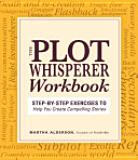
*****Any one who isn’t ready for a plot consultation or simply prefers to go it alone, The Plot Whisperer Workbook: Step-by-Step Exercises to Create More Compelling Stories walks you through the process. Space is provided in the workbook where you can take notes, fill out the 7 essential elements of your scenes, plot scenes out on plot planners, deliberate your themes, and much, much more.


And you know, I have that book, but I didn’t go to it.  The consultation is more what I personally needed at this point. Sometimes we just need someone to talk it out.

In honor of our five year birthday bash I am going to pay for a one hour consultation with Martha. One lucky commenter will win the consultation.

Oh I love birthdays. I’m offering you your choice of The Plot Whisperer: Secrets of Story Structure Any Writer Can Master or the companion workbook, The Plot Whisperer Workbook: Step-by-Step Exercises to Help You Create More Compelling Stories, to 3 lucky commenters today. 


And to keep with the theme of fives this month, a fifth winner will receive a  copy of Price of Victory.  And I'm so excited because as of today the winner can choose between a hard cover copy or KINDLE.  I'm in ebook now.  woo hoo

Thank you Martha, for joining us today and sharing with Seekerville how exciting it is to work with a Plot Whisperer.   I can hardly wait to get started on all the ideas you’ve generated.  

Oh yes,  Chocolate Velvet coffee is on. A variety of teas and hot chocolate are on the table beside the yummy carrot cake that Martha and I both favor. (And we are sharing it only because we love you too, Seekerville, )

 (Yum! Thank you, Sandra. This was a blast! –Oh, dear. “Blast” certainly dates me. Many of you probably are not even familiar with the term anymore.)

Don't forget to log onto the Weekend Edition on Sunday for winners.


Have We Got Presents!!

Tuesday, August 28, 2012

FINDING THE STRONGEST CLIMAX with Martha Alderson, The Plot Whisperer


Sandra here to introduce to you a special friend I met at the Desert Dreams conference last April.  Martha Alderson is the Plot Whisperer.  She has a wonderful gift that helps the author bring out the best in their plot.


She wrote the book THE PLOT WHISPERER and if you've ever had a chance to study it, you will agree it is a terrific aide in developing plot.


I asked Martha to join us today because this week her new workbook is debuting.  It is a wonderful aide in applying the techniques taught in her book.  Martha will be donating three copies of her new workbook, THE PLOT WHISPERER WORKBOOK, to three lucky winners who comment or ask her a question today.


Martha, can you give us a sample of the kind of thing we will find in your workbook?
.


Finding the Strongest Climax 

In the buildup to the climax of a story, the protagonist must keep her wits and strength about her. She may enter the final quarter of the story relatively weak. When she meets with an antagonist who is stronger than she is, the protagonist still can be knocked off course. When that happens, she is forced to readjust her course and follow an altered direction toward her goal. Still, during the entire final quarter of the story, the energy of the story moves steadily higher. Even when she meets up with a stronger force and needs a change of tactic, she is steadily climbing upward toward her goal.

The stronger the pressure is against her, the greater the strength the protagonist gains when she confronts and overcomes that force. The greater the force is against her, the bigger the change in her direction. The more dramatic the change in direction, the greater excitement and anticipation in the reader and audience.

The amount of power and strength, confidence and esteem gained and lost by the protagonist at the end and the degree of change in direction toward her goal determines when the energy of the story is at its greatest. As she gains more and more strength, her interactions will weaken her antagonists and may result in the actual destruction of her foes (internal and external). Finally, the words she speaks and the ideas she voices are heard and, for the first time, actually make an impact. The stronger the foe being destroyed by the protagonist makes for a stronger climax at the end.

A story is all about relationships. How a protagonist interacts with others in the beginning and the middle of the story predicts the self-knowledge she needs to gain to prevail at the end. Her relationship with nature, friends, family, community, her faith—or lack thereof—predicts the self-knowledge she needs for transformation. How she interacts with herself is the greatest predictor of all.

The protagonist suffers in the middle of the story to gain strength and courage and to learn to trust herself. To withstand modification and alterations, the protagonist must assess her values and ideas she has been taught and her beliefs around those ideas. She must ultimately assess life itself and her part in it.

What Doesn’t Work

I am often asked what the #1 problem writers have with plot. My answer varies, depending on the most recent plot consultation or plot workshop I've just done.

Today I say as I have before, the #1 plot problem writers struggle with is the climax and resolution.
So much time and thought and writing goes into developing a compelling protagonist with a mysterious back story, deciding where is the exact right beginning of the story, how to make the action exciting and the book concept big, the details just right, the dialogue snappy, the setting exotic, the crisis disastrous.

I rarely (and I mean rarely) find a writer who has thoroughly thought out the climax and written the end quarter of the story as many times or more than the beginning.

Sure, writers bog down in the middle and thus the climax seems incredibly far away -- nearly out of reach. By the time a writer limps her way to the climax, the story is lucky to have an ending at all, much less an ending that is meaningful and different and leaves the reader satisfied and wanting more.

The end of a romance novel, even if it is for a teen, especially if it is for a teen, is so much more than... they lived happily ever after. You have been so careful not to use clichéd phrases, metaphors, settings and have worked to make every element uniquely your own. Why settle for a clichéd ending?

When a character rises in triumph at the climax, what does she look like, act like? In the resolution, what does the world look like now that she is new and different and transformed and has shared the gift she came to share?

Take an ending you're sure has no value and turn it on its ear. See the ending from a different angle or perspective. Write that.

Strive to give the reader something new and fresh and miraculous...

The Story End

That fabulous beginning of your story and that wild twist in the middle do not count nearly as much as to a reader as the end of the story. Sure, you hope she looks back and sees how everything is seamlessly tied together. In fact, what she’s going to think about first is how the story ends.

Readers and audiences are affected first and foremost emotionally by the story they read, whether the story evokes fear or anger, joy and celebration, or sadness and resignation. Connecting with readers emotionally to the point they become instinctively involved in the story is the dream of every writer. The best place to search for this emotional effect is at the climax.

Think Different
Look beyond the words and sentences and scenes to the deeper pattern of your story. Every protagonist begins a story wanting something. The real reason that she goes after what she wants never (or rarely) is her stated reason. In fact, at the end of the story the protagonist can, and often does, fail at her stated goal. The reader cares because she knows the protagonist has actually won what she wanted and all that really matters is herself. She has gained self-knowledge and because of that she has been changed and transformed.

After having all of her layers stripped away one by one as false or unreliable, the protagonist reaches the point where she either must break down and live an unlived life or stand straight and rely on herself. To do that, first she must find the self on which she can rely. This is why often in a story, the protagonist’s stated goal fades and is replaced by the real goal.


This is an excerpt from Martha Alderson, aka the Plot Whisperer, new plot workbook: The Plot Whisperer Workbook: Step-by-Step Exercises to Help You Create Compelling Stories – a companion workbook to The Plot Whisperer: Secrets of Story Structure Any Writer Can Master (Adams Media, a division of F + W Media).

She has also written Blockbuster Plots Pure & Simple (Illusion Press) and several ebooks on plot, including one for romance writers.


As an international plot consultant for writers, Martha’s clients include best-selling authors, New York editors, and Hollywood movie directors.

She teaches plot workshops to novelists, memoirists, and screenwriters privately, at plot retreats, through Learning Annex, RWA, SCBWI, CWC chapter meetings, at writers' conferences and Writers Store where she takes writers beyond the words and into the very heart of a story.

As the founder of Blockbuster Plots for Writers and December, International Plot Writing Month, Martha manages the award-winning blog for writers, awarded by Writers Digest 2009, 2010, 2011, 2012.

Her blog, How Do I Plot a Novel, Memoir, Screenplay covers 27 steps to plotting your story from beginning to end:

Sandra again.  Please check out the above links.  The last one, How Do I Plot a Novel features YouTube lessons to watch.

Find Martha on Facebook


Thank you again Martha for joining us today.

And don't forget to check the weekend edition to find out if you're a winner of one of Martha's workbooks.  It is wonderful.  I can hardly wait to start using the one I purchased.

I brought Martha's favorite treat---carrot cake with lots of yummy cream cheese frosting.  And to go with that we have a huge pot of chocolate velvet coffee, a selection of flavored ice teas (raspberry and green tea is really refreshing and so is the peach and chai),