Showing posts with label motivation. Show all posts

Tuesday, October 24, 2017

Ten Reasons Not to Write. WHAT??

Happy Birthday to us.


Wow. Ten years of blood, sweat, and tears. Accompanied by shouts of success, tears of joy and years of growth and love. What more could we ask?

We started out as writers seeking to be published. We were seeking the tricks of the trade and the secrets that would launch our careers as authors. We decided to share what we learned and by doing that, we have learned as well. And have been immensely blessed.

But there have been times when we had to make serious decisions about writing. My topic today to fit in with the theme of ten is to list ten reasons not to write.

WHAT???

I hear you screaming at me.  Smile

I personally have not faced all ten of these reasons, but have faced several and I think it is important to realize that there might be times in your life or writing career when you need to make the decision not to write or to push on through.

What I hope to accomplish by doing this is to reassure you that making that decision doesn’t mean the end of things.  It could mean big changes.  It could mean you are ready for a new direction. It could mean that maybe God had other plans that He needs you to do more than your dream of writing and becoming published. And it could mean that He does intend or you to write, but maybe not at this time.

And sometimes, it may seem like the time not to write and that you really need to push through those times and write anyway. That has happened to many of us also.

But circumstances and difficult times do come up. So how do we tackle them so that we know what course to follow?


Let’s look at those ten reasons and see what we can do.

1. You lose your editors and the new ones you have been assigned to don’t like your writing style. 

This happened to me. I was writing for Harlequin, Time Warner, and Rosen Publishing and lost all three editors at the same time.  My new editors did not like my writing and were devoted to their own “stable”. This was in the eighties and in the days before we had agents to help us through those muddy waters. So I stopped writing for reasons that worked for me. (See number two below)

Many of my writing friends at the time went on to be best selling authors.  Many authors have lost their editors and they just kept on writing until they found another editor that liked their work. Now, today, with agents, that process is a lot easier. You have an agent watching your back and helping you through it.

Lesson.  You can keep on writing and persist.  Or maybe there is something else that you need to be doing.  Either way, you are going to accomplish something.


2. Another job comes up that you really have a desire to pursue. That job takes too much out of you and you cannot continue to write.

As mentioned above, I wasn’t getting anything published, so hubby insisted I go back to teaching and finish that career, get my retirement and then I could write what I wanted.  Oh, I did not want to do that.  I prayed for the Lord to give him wisdom. The harder I prayed, the more he insisted until I finally got the message.  LOL.   I did go back to teaching.  That job took so much out of me that I didn’t write.  However, my students all won writing awards. And I now have a wonderful retirement and don’t have to write things I don’t want to write just for the income, which is what I was doing before.  Looking back, (isn’t hindsight great?) I see that I was accomplishing good with all the students I taught, the staff I worked with, and time with family. 


 3. You need to work a job that pays more money than you are making as an author. Maybe you’re the sole support for yourself and/or family.

I know several writer friends who work a day job and then write during early morning hours or late evenings. This is often what they need to do to support themselves and their family. You often hear the saying “Don’t quit the day job.” Well, this is important because most authors take a few years to build up to a decent income from their writing. Oh yes, there is that rare bird that makes a best seller hit on their first venture out as an author, but the reality is, it takes years of sweat and tears and persistence to make a decent income.

Often day jobs take so much out of you that you really don’t have any energy or motivation left. That happened to me. Teaching was extremely draining and truthfully that was so because I was a good teacher and worked hard with those students. I stopped writing and put that dream aside until I retired.

I remember Nora Roberts telling us at a workshop how she found a job selling insurance in Sears stores where she sits at a desk most of the day and rarely was approached.  She said it was a great job to have because she could write on the job. Many others have had day jobs that allowed time to write or at least think about your plot in your head. So they don’t need to quit writing.

I have friends who work 55-60 hour weeks and still get up early and write for an hour every morning. They end up with two novels per year.  Now that’s dedication and persistence. But it’s doable if you have the motivation and stamina. 

Not all of us do have that stamina and motivation. So yes, maybe you quit writing until you have retired or don’t need that job anymore.

Lesson:  You can keep on writing and persist.  Or maybe there is something else that you need to be doing.  Either way, you are going to accomplish something.


 4. You have everything you need, like money, lifestyle, etc and just aren’t motivated to write. It is after all, difficult work.

Strange as it sounds, this happened to me. I did finish my teaching job and retired and frankly am having difficulty motivating myself to write. My hubby declared his main job as a retiree was to be in charge of fun and he is very good at it. We do so many activities, travel a lot and interact with so many people and groups, that I am just as tired from all the activity as I used to be from working. LOL

But I do persist and have learned to get up early before hubby gets up and I can do like the day job friend and write for an hour a day. A book does get finished.  However, quite frankly there have been times when we are so involved in projects that I don’t get to the writing.

Does that make me a bad person? Goodness, I hope not. My spiritual mentor in my early days as a Christian used to tell me, “whatever you are doing is what God had planned for you to do.”  That took away so much of the guilt.

 5. You have a family member or friend that needs you i.e. elder care, handicapped or disabled person.

This definitely happened to me. When I retired, I started telling people that I retired from teaching, but have a new job in elder care. All of my parents, (in laws, step parents, birth parents) and a couple friends that named me as their trustee developed every health issue you can think of and I had to deal with it.  Cancer, stroke, Alzheimer’s dementia, several bypass heart surgeries, rheumatoid arthritis, etc.  I met Karen O'Connor in a conference in San Diego. She wrote a book called “Getting Old Ain’t For Wimps.”   There is definitely truth in that. check out her website for more great tips for dealing with aging.


Dealing with all of these health issues and elders who needed my help all at the same time about did me in. I didn’t write during the most intense years of elder care. I was too emotionally drained to think straight let alone write.

Some of my friends do have elder care issues and still manage to write. I give them kudos because they have to have super strength and motivation to push on through all of the pain and heartache involved in elder care.  But they do it.  Just because I couldn’t do both, doesn’t mean I am weak in any way. It is the way I’m made. Many of you have more stamina and drive. Thank the Lord for that. But don’t beat yourself up if you can’t do both.

I was thankful that I was retired and could spend the time to help my elders. I didn’t begrudge the writing time. I just figured the writing time wasn’t now. And when the elders passed, I spent a year building back my strength and then began writing again. That was me.

Lesson: You can keep on writing and persist.  Or maybe there is something else that you need to be doing.  Either way, you are going to accomplish something.

6. You become sick, handicapped or disabled.

Fortunately, I have not had to face this issue personally. But I have friends who have and still do. If you are undergoing chemo treatments for cancer, there are going to be days you are not going to be able to write. If you broke your arm, wrist or hand, there are going to be days you can’t type. If you suffered a stroke, there are going to be weeks and months before you can write again.

I have friends who have gone through serious trials, but upon recovery, went back to their computer and are writing again. Their illness may have stopped their writing for a time period, but most of the time it hasn’t meant a permanent leave of absence from their desk.

There are friends though that, bless their souls, will probably never write again. There is no shame in that. Life happens.

Lesson: You can keep on writing and persist.  Or maybe there is something else that you need to be doing.  Either way, you are going to accomplish something.

7. You start a family and have children that demand your time and leave you no time or energy for writing.

Many of you young writers have this issue to deal with. Young children demand a tremendous amount of time and energy. They have been given to you to care for and I’m sure God is pleased if you stop writing to attend to their needs.

Some of you super moms still write anyway. I’ve met some who incorporate their writing time with their children. They become role models of persistence and hard work. That is wonderful and a blessing.

Not all of us are built that way. Each family and each set of children are different in their needs and demands. Each of us is different in our levels of energy to handle them. So if you stop writing to raise your children or as in some cases, grandchildren, don’t feel guilty. Your time will still come. Those children eventually grow up, go off to school, become writers themselves, etc.

Lesson: You can keep on writing and persist.  Or maybe there is something else that you need to be doing.  Either way, you are going to accomplish something.


8. You don’t want to cater to the demand for an author to be involved in social media.

Oh my, this one hits hard. I really struggle with social media. I’m so busy with all the activities my husband gets us involved in that I treasure my moments to myself and want them for writing, not playing around on social media.  Doing so steals so much of your time.

But social media presence is a requirement in this day and age of writing. With the loss of bookstores and the paradigm shift in the industry, you are going to need social media to get your name known.

You just have to carve time to include it as part of your writing dream. If it takes too much time or you don’t want to participate in social media for security reasons, you may decide not to write.

Lesson: You can keep on writing and persist.  Or maybe there is something else that you need to be doing.  Either way, you are going to accomplish something.

9.  You don’t have any more stories in you that you feel need to be told.

When I came back to write after retirement, Christian and wholesome novels were pretty well non-existent. Some popular secular authors like Francine Rivers and Robin Lee Hatcher were breaking inroads by switching genres and publicly declaring why they were doing that.

Many of us felt it a mission to get more clean and wholesome novels out there. Today, the Christian market has grown and is one of the best selling genres of romance.

This makes me wonder if my stories really need to be out there. Readers have a huge choice of wholesome novels to read these days.  Yay!!  What a blessing and I’m so thankful for that.

So maybe I will decide not to write anymore. Maybe there are other reasons the stories aren’t there. You might be called for other purposes.

Lesson: You can keep on writing and persist.  Or maybe there is something else that you need to be doing.  Either way, you are going to accomplish something.


 10.  You want to retire from writing to pursue other interests.

Writing is a career and like other careers, a writer might feel the need to retire. As we age, we have less energy and maybe have other interests we feel led to pursue.

One talented artist friend of mine left his art. He had the gift of healing and he devoted his time to that instead. He felt led and called to do so.

You may not have a particular calling that you are led to pursue, but may simply be ready to stop working as a writer with all its demands. We each are made differently and have different motivations, energy levels and desires. So embrace that and be thankful for what you have accomplished to this point.

I do know writers who have continued to write until they were taken home. They had that calling. But like we have already pointed out, each one of us is different. Whether we retire or keep on writing, we will be doing what we are called to do.

Lesson: You can keep on writing and persist.  Or maybe there is something else that you need to be doing.  Either way, you are going to accomplish something.


Hubby and I on the beach in Maui, Hawaii earlier this month

So what I wanted to impart today was the seed acceptance. We are all different and have our own individual needs and motivations. Embrace your own calling and pursue your own dreams. No matter what you decide to do, it will be right for you. Listen to that inner voice and trust the Lord to provide and guide.

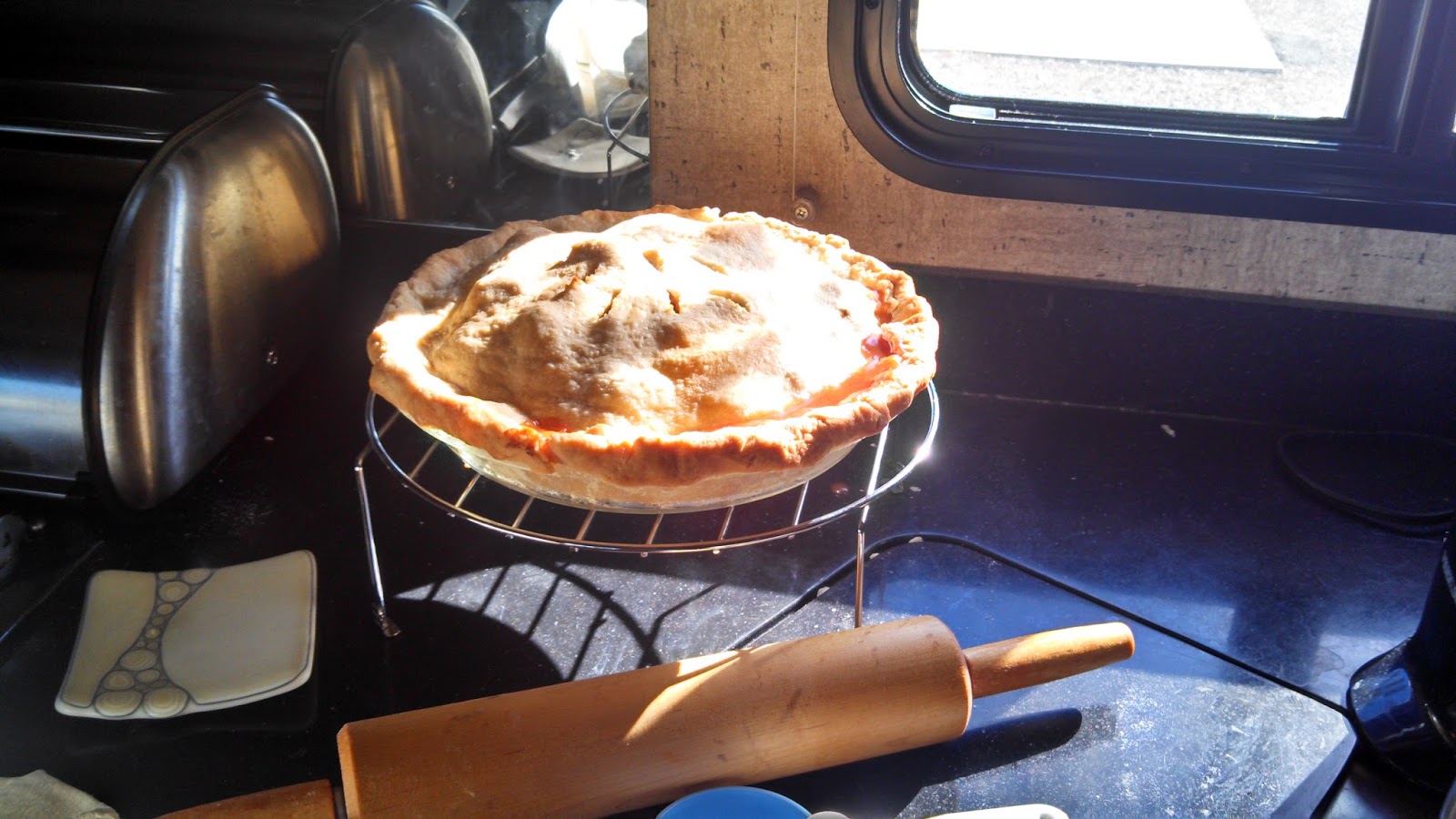
To celebrate our birthday, I’ve baked several apple pies. In our family we order pie instead of cake because we love pies.  And truthfully, I can bake a dynamite pie, but my cakes often become Grand Canyons. LOL 


Hubby and I just returned from our fiftieth-anniversary celebration in Hawaii. (Yes, I know, our anniversary was in March, but we have been celebrating all year)  I went to a local street fair and found this lovely Kindle/I Pad bag, made by the locals. The street fair was marvelous. Permits are not needed to set up a booth so no restrictions. You would not believe how many booths were set up with people promoting Christian churches and ministries. There was one booth where people were lined up for healing prayers. I was astounded because we often see that kind of thing prohibited in public. 

Comment today and win this lovely handmade bag and an autographed copy of one of my books. Let us know how you’ve dealt with decisions to write or not write. Readers, we welcome your comments as well. You may have faced difficult decisions also and can share how you dealt with them. One bag for a reader and one for a writer.


Aren't these bright and colorful?

Sandra Leesmith writes sweet romances to warm the heart. Sandra loves to play pickleball, hike, read, bicycle and write. She is based in Arizona, but she and her husband travel throughout the United States in their motorhome and enjoy the outdoors. You can find Sandra's books here on Amazon. Three of Sandra's most popular books are also audio books at Audible. You can read more of Sandra's posts here.


Friday, September 29, 2017

Best of the Archives...Yes, You Can! Motivation for Writers!

Debby Giusti here!

As we approach our tenth Seekerville birthday, I thought this article, first published in 2014, might be worth revisiting. 

When looking from the outside in, success can appear to be easily achieved. In reality, most accomplishments come about only with hard work and determination.

The fact was recently brought home to me by my young granddaughter. She wrote a school report on Laura Ingalls Wilder, and the information she uncovered in her research gave me pause. Although I had read and reread the Little House series as a child, I had forgotten many of the hardships Laura and her family faced.

Even after Laura married, she and her husband experienced a number of setbacks. Almanzo was stricken with diphtheria and had to walk with a cane for the rest of his life. They had a baby boy who died, a fire destroyed their barn, another ravaged their home, and drought and illness put them in debt and unable to farm their land. Later, the savings they had been able to accrue was wiped out by the Stock Market Crash of 1929.

Their daughter Rose--a reporter for the San Francisco Bulletin--encouraged Laura to write a story about her childhood to help augment the family’s income. That first attempt, titled Pioneer Girl, was rejected, but Laura didn’t give up. She reworked her manuscript, changed the title, and with Rose’s help, Little House in the Big Woods was published in 1932. Laura was in her sixties. The final book in the series, Those Golden Years, was released in 1943 when Laura was 76 years old.


In an era when most sexagenarians were looking back over the lives they had lived, Laura looked to the future. She had a vision and a publishing dream, and in spite of adversity, she achieved her goal.

What about you? Is age holding you back? Can you ignore the calendar and focus on the future instead of fretting over the past? Does life pull you down? If so, can you muster Laura Ingalls Wilder’s pioneer spirit to rise above hardship and misfortune?

Yes, you can!


Most of us know JK Rowling’s rags to riches story. A single mom without a job, she had seemingly hit rock bottom, yet unemployment gave her the time and freedom to bring Harry Potter to life.


Looking back, she wrote:

“Failure meant a stripping away of the inessential. I stopped pretending to myself that I was anything other than what I was, and began to direct all my energy to finishing the only work that mattered to me. Had I really succeeded at anything else, I might never have found the determination to succeed in the one area where I truly belonged. I was set free, because my greatest fear had been realized, and I was still alive, and I still had a daughter whom I adored, and I had an old typewriter, and a big idea. And so rock bottom became a solid foundation on which I rebuilt my life.”( J. K. Rowling, "The fringe benefits of failure", 2008)

In 1998, Harry Potter and the Sorcerer's Stone was published in the US. Six years later, Forbes Magazine claimed JK Rowling was the first person to become a billionaire by writing books.

Have you bottomed out? Are you surrounded by darkness or can you see a light pointing you in a new direction? Like JK Rowling, can you turn a negative situation into something positive?

Yes, you can!


A local trial planted the seed for a story that Mississippi attorney John Grisham wanted to tell. Needing extra time in his busy schedule, he arrived at his office at 5 AM and used the hours before the start of the workday to pen his prose, writing six days a week for three years.


The finished manuscript, A Time to Kill, was rejected by 28 publishers before Wynwood Press offered publication. Only 5,000 copies sold once it went to print, but that didn’t deter Grisham, and after finishing his first story, he quickly crafted a second. The Firm sold more than seven millions copies, remained on the New York Times Bestseller list for 47 weeks and propelled Grisham into the limelight.

Is your day packed with commitments—job, school, family? Can you adjust your schedule to find time to write? Hurt by rejection? Instead of a stumbling block, can you see rejection as a stepping stone to success?

Yes, you can!

New York Times bestselling author Debbie Macomber frequently mentions her dyslexia and the teacher who scoffed at her attempts to write when she was in high school. Instead of discouraging Debbie, the teacher’s hurtful words made her even more determined to succeed.

Debby Giusti (L) chats with Debbie Macomber
at Barbara Vey's Reader Appreciation Luncheon 2014

Debbie believed in her ability, and her husband believed in her as well. Money was tight, but the stay-at-home mom with four little ones to care for used a rented typewriter to create her stories. Heartsong sold in 1982 and was the first category romance reviewed by Publishers Weekly. More than 170 million copes of her books are in print. Her Cedar Cove series is showcased on the Hallmark television channel, and her Christmas story, Mr. Miracle, will be a Hallmark movie this fall. Debbie also owns a tea room and yarn shop.

Dyslexia didn’t stop Debbie Macomber. Nor did criticism of her writing. She believed she could succeed, and she did. What’s stopping you? Can you see any weakness or disability as being one small facet of who you are and instead focus on your many strengths and God-given talents?

Yes, you can!


Anne Frank, a young Jewish girl, wrote her diary during the German Occupation of the Netherlands in World War II while she and her family were holed up in a cramped attic hideaway in Amsterdam. A total of eight people lived in the Secret Annex, as Anne called it, for over two years until they were discovered, arrested by German police and sent to concentration camps. Anne and her sister Margot ended up at Bergen-Belsen where they died during a typhus outbreak, just a month before the Allies liberated the camp on April 12, 1945.


Anne’s father Otto survived, and after the war, he published her diary. The first American edition, titled Anne Frank: The Diary of a Young Girl, was released in 1952. In 1999, Anne’s name was included in Time Magazine’s list of “The Most Important People of the Twentieth Century.” The article stated, "With a diary kept in a secret attic, she braved the Nazis and lent a searing voice to the fight for human dignity."

As many young girls do, Anne Frank dreamed of being a writer, but her life was short-lived and her world confined to an attic hideout. Do you feel trapped by circumstances? Can you free yourself from those things that imprison you? Can you concentrate on life’s possibilities instead of seeing only the restrictions and limitations?

Yes, you can!


Ben Carson was raised by a God-fearing mother who often worked three jobs to provide for her two sons. She told them they could accomplish anything in life, but inner-city Detroit was a rough place to grow up. Ben struggled in school and had an angry temper that often got him in trouble. Determined to save her sons, their mother limited television, required them to read two library books a week and insisted their homework was done before they could go out to play.


Books opened a whole new world for Ben. His grades improved, and he eventually achieved his dream of going to medical school, where he excelled. In 1985, at the age of 33, he became director of pediatric neurosurgery at Johns Hopkins and is internationally recognized for his work with conjoined twins.

Knowing the importance of education, Dr. Carson has done much to help children succeed. In 1994, he and his wife established the Carson Scholars Fund, which provides scholarships for elementary and high school students in recognition of their academic achievement.

In addition to his successful medical career and humanitarian outreach, Dr. Carson has published six books--Gifted Hands, Think Big, The Big Picture, Take the Risk, America the Beautiful, and One Nation—with reoccurring themes of the value of hard work and faith in God.

Thanks to his mother’s love and God's grace, Ben Carson chose the right path for his life. If you’re headed in the wrong direction, can you make a detour that gets you back on track? Rough childhood, bad environment? Can you leave the past, change the present, and set your sights on future goals?

Yes, you can!

I’ve mentioned only a few writers who have succeeded, but there are many more that deserve recognition. Are there inspirational stories of achievement that have impacted your life in a positive way? What motivates you during the tough times? Is there a person or persons who encourage you to keep working toward your goal? No comments today, but I hope you'll take time to ponder a few of these questions and realize that "Yes, you can!"

Wishing you abundant blessings,
Debby Giusti

Undercover Amish, the second book in my Amish Protectors series, hits the shelves on Oct 1!

Undercover Amish
By Debby Giusti

After Hannah Miller’s mother is murdered and her sisters go missing, someone comes after her. Now the only way she can survive is to entrench herself in an Amish community…and rely on Lucas Grant, a former police officer who is planning to join the Amish faith, for protection. But finding refuge for Hannah— disguised as Plain at a secluded inn—pulls Lucas back into his old life. And when Lucas discovers the criminals after them may be the people who killed his partner, the mission to take them down becomes personal. With the assailants closing in, though, can Lucas stop them…and finally put his past behind him to start an Amish life with Hannah?
Pre-order here!


Tuesday, March 14, 2017

When Did You Know You Wanted to Be a Writer?


Greetings, Speedbo-ers! Myra here. How’s it going? Better than you hoped? Not so great? Either way, if you’re writing, you’re progressing. Even if you write only 100 words today, that’s 100 more than you had yesterday, and they all add up!

If you’ve made it this far, congratulations—you’re almost halfway through Speedbo ’17!

If you’ve made it this far, it’s because you have something to say and you’re determined to get it written.

If you’ve made it this far, you already know you want to be a writer, and you’re committed to making it happen.

But when did you first acknowledge the dream of writing? How did it happen for you? Was it a gradual process? A lightning-bolt epiphany? Or did you just always know?

Taking time to ponder these questions isn’t a waste of Speedbo brain power. In fact, recalling the how and why that made you decide to be a writer can be extremely motivating. Can you remember the thrill of getting those first words on paper, the anticipation as your very own story took shape? 

Right now, when some of us may find ourselves languishing in the “sagging middle” doldrums of Speedbo ’17, we need all the encouragement we can get to keep plugging away until we can type “the end.”

So with that in mind, let’s hear from a few Seekers about when they first knew they were meant to be writers. Read and be inspired!


Ruth Logan Herne: I knew I wanted to be a writer from the time I read my first notable chapter book, "Understood Betsy,” by Dorothy Canfield Fisher. I was probably about eight or nine years old, and I knew I wanted to tell stories like that, just like that! To see Betsy come out of her shell, to watch her grow in so many ways, and to see how well the happy ending turned out... I was totally on board from that day forward. I used to make up stories before that... but once I read a big girl book, I realized I wanted to write them, not just tell them!


Missy Tippens: I discovered I wanted to be a writer after I wrote my first novel. I started the story just for fun, because I enjoyed reading so much. Once I plowed through, writing that book in two and a half months (while nursing a baby!), I was hooked. But, still, it took several years before I found the nerve to say out loud that I was a writer.


Pam Hillman: I knew I wanted to be a writer as soon as I figured out that somebody somewhere got to put those stories on paper so that I could read them. Two distinct memories come to mind. My first grade teacher would put us in a circle and read to us every day. I guess that was quiet time right after lunch. I loved that part of the day. And on another occasion, we had a swap day. I took a small stuffed brown bear that I’d gotten on vacation, but another girl brought a book. The title was The Kitten Twins. I wanted that book SO bad and I got it. Was it a good trade? To me, it was the most wonderful trade in the world. I even named my cats Twinkle and Boo after the kittens in the book. This is the book. It makes me smile just to look at it. :) 


Janet Dean: At the age of twelve, I was writing what I now realize was romance. I would illustrate my love stories, drawing my heroines’ faces in profile and giving them long wavy hair that fell to their shoulders. They all looked alike and beautiful, at least to me. I let some of my girlfriends read my stories. Their interest probably fueled mine. At some point, I must have been embarrassed by my childish efforts and threw them away as none of these stories survive. But from that point on I believed that one day I’d write a book.


Debby Giusti: I thought I was a writer in third grade when I penned a neighborhood newspaper and wrote my first book—a very short manuscript—about seven girls, aptly titled, “We are Seven.” Fast forward to when my children were little. I published a few articles in nationally circulated magazines, then put my writing on hold until years later when I freelanced for a number of magazines. At that point, I considered myself a writer, but when my debut novel, Nowhere To Hide, released in May 2007, I moved from writer to author, which was always the desire of my heart. 


I remember writing my very first story when I was around seven years old. The title was “The Enchanted Prince,” and I can still picture my school desk, the lined notebook paper I wrote on, and the title neatly penciled across the top of the page. I went on to write many stories and poems throughout my school years. The most fun were those never-ending sagas I shared with my closest friends a chapter at a time. One was a takeoff on those Gidget beach movies so popular in the . . . well, let’s not get date-specific. Another was my extremely imaginative version of “The Girl from U.N.C.L.E.” Writing was definitely fun in those days because I was just making stuff up! I suppose I’ve known for most of my life that I wanted to be a writer, but the real validation came in 1985, when I received my very first acceptance letter and check for a children’s short story.

When did you first realize you wanted to be a writer? Or, if you’re a reader, can you recall the first book that got you hooked on reading? Share with us in the comments!

Today’s giveaway: I’m excited to announce the upcoming release of A Rose So Fair (Flowers of Eden, book 3)! If you’ve been waiting for the story of spunky farm girl Rose Linwood’s romance with handsome Caleb Wieland, you could win one of the very first copies off the press! To be entered in the drawing, just let me know in the comments. In honor of book 3 in the series, I’m giving away 3 copies!

About Myra: Award-winning author Myra Johnson writes emotionally gripping stories about love, life, and faith. Myra is a two-time finalist for the prestigious ACFW Carol Awards and winner of Christian Retailing’s Best for historical fiction. Originally from Texas but now residing in the beautiful Carolinas, Myra and her husband love the climate and scenery, but they may never get used to the pulled pork Carolinians call “barbecue”! The Johnsons share their home with two very pampered doggies who don’t always understand the meaning of “Mom’s trying to write.” They’re also currently harboring their younger daughter and family (six in all plus a kitty!) as they transition toward their next missionary calling. With grandkids underfoot ranging in age from 14 down to 3, there’s never a dull moment! 

Twitter: @MyraJohnson and @TheGrammarQueen 

Sign up to receive Myra’s quarterly e-news updates here!


Saturday, October 15, 2016

5 Steps to Getting Your Writing Goals Back on Track

.

It seems like only yesterday that we kicked off our Seekerville Rockin’ New Year’s Eve Party and many eagerly committed to follow the Face Your Fears “path” during the coming year.
.
A glance at the calendar, however, confirms those promising twelve months are winding down. Falling leaves, crisp days and downright nippy nights corroborate a nagging feeling that if we intend to meet our writing goals, we’d better make the most of the coming weeks and get ourselves back on track.
.
So how did you do the first three quarters of the year? On New Year’s Eve you were likely acutely aware of the fears you needed to face in order to write with purpose and productivity and you were determined to move confidently ahead. Are you still following the route you mapped out early in the year? Or have you been knocked off the path into the thick foliage of what life has unexpectedly thrown at you or wandered off and gotten lost in knee-high weeds of poor choices you’ve made? Maybe you’re even thinking “What’s the use? The year is almost over. I’ll start again next year.”
.

Sure, that’s an option, but hold on just a minute!  Why not start fresh now? Today? Build up a momentum for leaping into a new year? Just because best intentions may have flagged—or flopped—that doesn’t mean you’re forced to resign yourself to crawling into bed, pulling the covers over your head, and hibernating until January 1. If you’re not quite where you wanted to be or maybe your good intentions barely got off the ground, there are still two and a half months remaining to prepare yourself to roll into another fresh year full steam ahead.
.
So what do you think? Are you willing--compass and machete in hand--to fight your way back to the path you’d like to be on? Or do you plan to slink off, whimpering, into the shadows?
.
If you decide to give it a go, here are a few steps that might help get you rolling again.
.

#1: Revisit your goals. You wrote them down, didn’t you? Studies show that people who write down their goals are mega-times more likely to meet them than those who don’t. Are those original goals for the year still your goals? Would you like to make headway on them before the end of the year?
.
#2: Pinpoint exactly where you fell short…and why. It’s okay to have changed goals midstream—or to take a “time out”—but did you really choose to or did you allow yourself to drift off the path in whatever direction seemed easiest or most distracting at a given moment? This isn’t the time for excuses or self-justification—nor time to beat yourself up. What life dishes out can sidetrack us—uncontrollables like illness, relocation, natural disasters, child and eldercare, lost jobs or excessive overtime. The list is endless.
.
No, now is the time to be honest with ourselves about the controllables. It’s a time to objectively identify and evaluate specifics, not generalities. Not just “I didn’t have time to write” but “I didn’t have time to write because I watched hours of TV every night.” Not “I didn’t enter the contest” but “I didn’t enter the contest because I feared the feedback I might get.” Not “I didn’t start that next book” but “I didn’t start that next book because I’d lost confidence after my dream agent rejected my first one.”
.
Awareness of the impact of choices is critical when journeying toward your writing goal.
.

#3 How might you have done things differently? Looking back, could you have chosen to stay on the path this year? Could you have gotten up a little earlier each morning to write or set a timer for 30 minutes each evening before crashing in front of the tube? Could facing your fears and entering that contest have garnered helpful feedback--even gotten your entry on an editor or agent judge’s desk?
.
Perhaps you could have objectively evaluated whether the agent’s reason for rejection held any merit or asked another writer for a second opinion—then either tweaked the manuscript and submitted it elsewhere or moved on to the next book. History is filled with bestselling authors who were rejected dozens and dozens of times.
.
Although you can’t have a “do over” of the past year, right now you can brainstorm alternate ways that you could have prevented yourself from wandering off the path—ideas that may possibly keep you heading in the right direction in future weeks. Ways to apply “lessons learned.”
.

#4 Map out a realistic plan. If you haven’t started the book you were going to write this year, it might be a bit too much to tell yourself you’ll finish it by year’s end—although I do know several writers who wouldn’t blink twice at that time limitation. But for us Average Joe’s, let’s make it realistic. Look at your calendar. Figuring in the upcoming holidays, family, friend, work, church and community commitments, are there days you could carve out 30 minutes? 60? 90?
.
Don’t let the fact that you don’t have all day to write intimidate you. The twelve books I’ve written have been composed in 60-90 minute snatches before work, with some weekend time and occasional vacation days as well. Figure how many words you can realistically write for the next few months during those set-aside hours—then add them up for a year-end total to establish your goal.
.
Or perhaps you told yourself you’d enter contests or submit a story to an editor or agent. If you get right on it now, you can still get it done well before the holidays. Or perhaps you wanted to take an on-line writing class or write a short story or novella. There’s still time if you pull yourself out of the overgrown weeds, take a deep breath, and make a realistic plan to get back on the path.
.

#5 Commit to moving ahead intentionally for the remainder of the year. Make a choice, a decision not to give up now. No, maybe you won’t reach every goal you so optimistically committed to on New Year’s Eve. But wouldn’t you much rather go into the new year knowing you’re back on track even in some small way rather than limping toward December 31, your confidence lost and eyeing the coming year with fears of a repeat performance of this one?
.
It’s a choice to continue on the path—or not. With the year winding down, which choice will you make?
.
Share with us today where you are on your writing goals for the year. Are you still sticking to the path or have you wandered off? Are there dark pockets of fear you need to dig out and expose to the light?
.
If you’d like to be entered in a drawing for a copy of my November Love Inspired release, “The Pastor’s Christmas Courtship,” mention it in the comment section, then check the Weekend Edition to see if you’re a winner!
.
Glynna
.
GLYNNA KAYE treasures memories of growing up in small Midwestern towns--and vacations spent with the Texan side of the family. She traces her love of storytelling to the times a houseful of great-aunts and great-uncles gathered with her grandma to share candid, heartwarming, poignant and often humorous tales of their youth and young adulthood. Her Love Inspired books--Pine Country Cowboy and High Country Holiday--won first and second place, respectively, in the 2015 RWA Faith, Hope & Love Inspirational Reader’s Choice Awards. Her November 2016 release, The Pastor’s Christmas Courtship, is available now (click here)!
.
Jodi Thorpe’s childhood vacation cabin seems the perfect place for her to heal her broken heart…and avoid Christmas cheer. After twelve years, nothing in Hunter Ridge has changed--except Garrett McCrae. The bad boy who was once her secret crush is now the town minister. And Garrett won’t let her miss out on all the hope and joy the holiday brings.  With every day he’s drawn to the vulnerable woman Jodi’s become, even as he’s about to leave for a mission halfway around the world.  But as they grow closer, their plans begin to change. Can Garrett make it a season to remember, with a love they can’t forget?